
In conversation with Helen McCusker
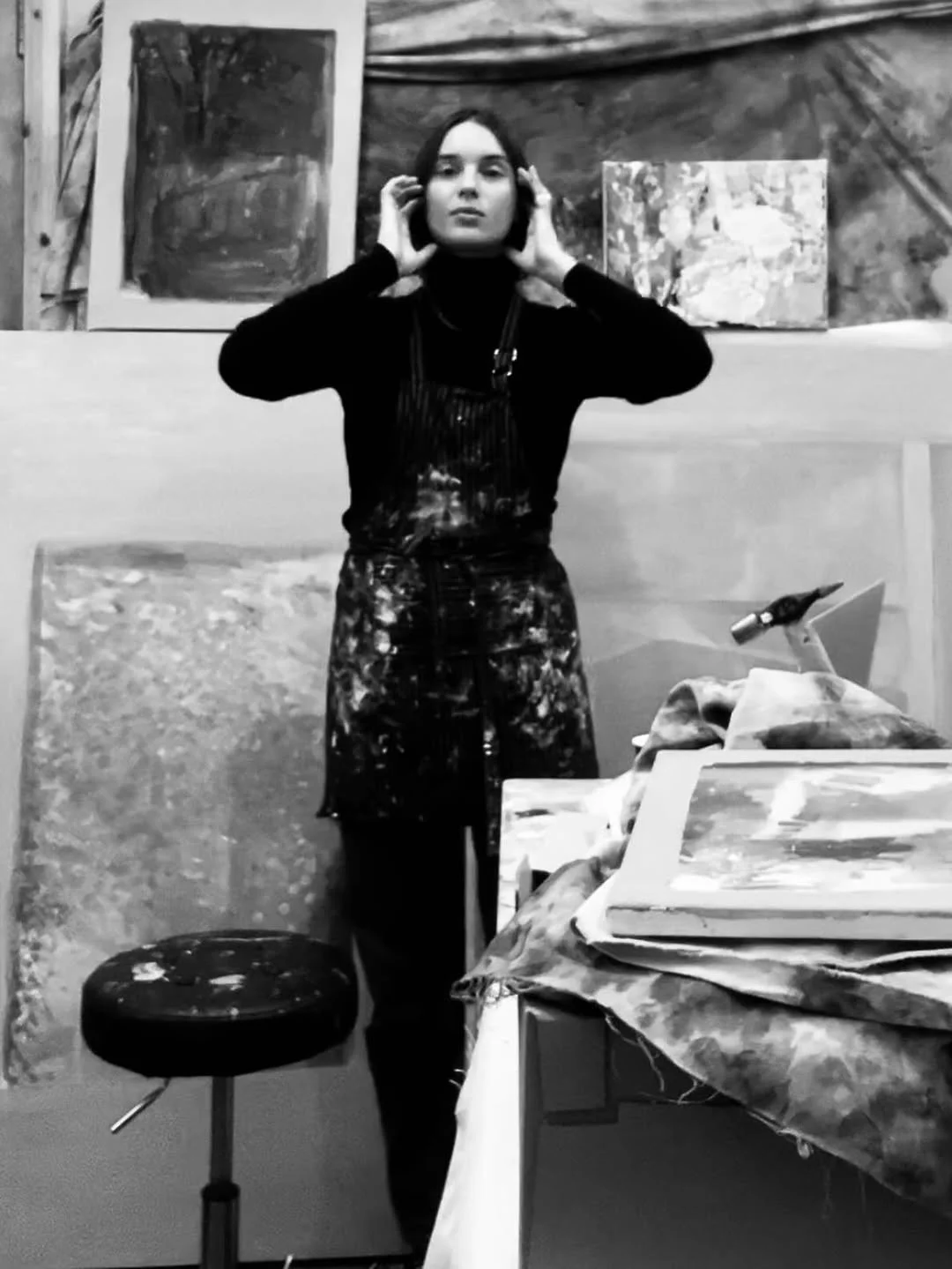
I first came across Helen’s work in 2023 and was immediately captivated by her use of colour and the dreamlike quality of her compositions.
When I began Paréa Ada last year I knew she had to be involved somehow. After a couple of lovely, long phone chats about the challenges of making art and the myth that an artist needs consistent solitude in order to create, we decided to collaborate on making time and space for artists to get together, get inspired, collaborate and create - whether that be a workshop or simply a group meet-up for a chat.
Almost year later, I catch up with Helen as she pursues her MFA at the Glasgow School of Art to talk about how her journey started as an artist and how its evolved.
PA: I always love to ask - what inspired you to become an artist? In particular, a painter.
HMC: My journey as an artist started in a more public way in New York, doing DIY shows in Brooklyn. I returned to the UK just before the pandemic, and with the freedom of time, began a daily practice.
I’ve painted since I was a teenager, but it was during this time of solitude and social media that I began sharing my work regularly and set up my own studio. That gave me the encouragement and discipline I needed to make the transition into having a full-time practice.
Online friendships and collaborations were born at this time, and my fear or worry about not being taken seriously for having a non-academic background started to bother me less.
I’ve always loved the idea of being a painter. The solitude and freedom of self-expression suited me. As the youngest child of five, I got used to time alone — mostly outside, entertaining myself — and I feel a direct connection between that and life as a painter.
I have two uncles who are painters, one professional and one for fun, and an older cousin who I was really fond of, who painted beautifully as a child. I was in awe of her skill for painting waves.
I continue to paint because I don’t want a life where I do a job I hate. I’m also not that interested in retiring or having a super luxurious lifestyle, so I guess that helps too.
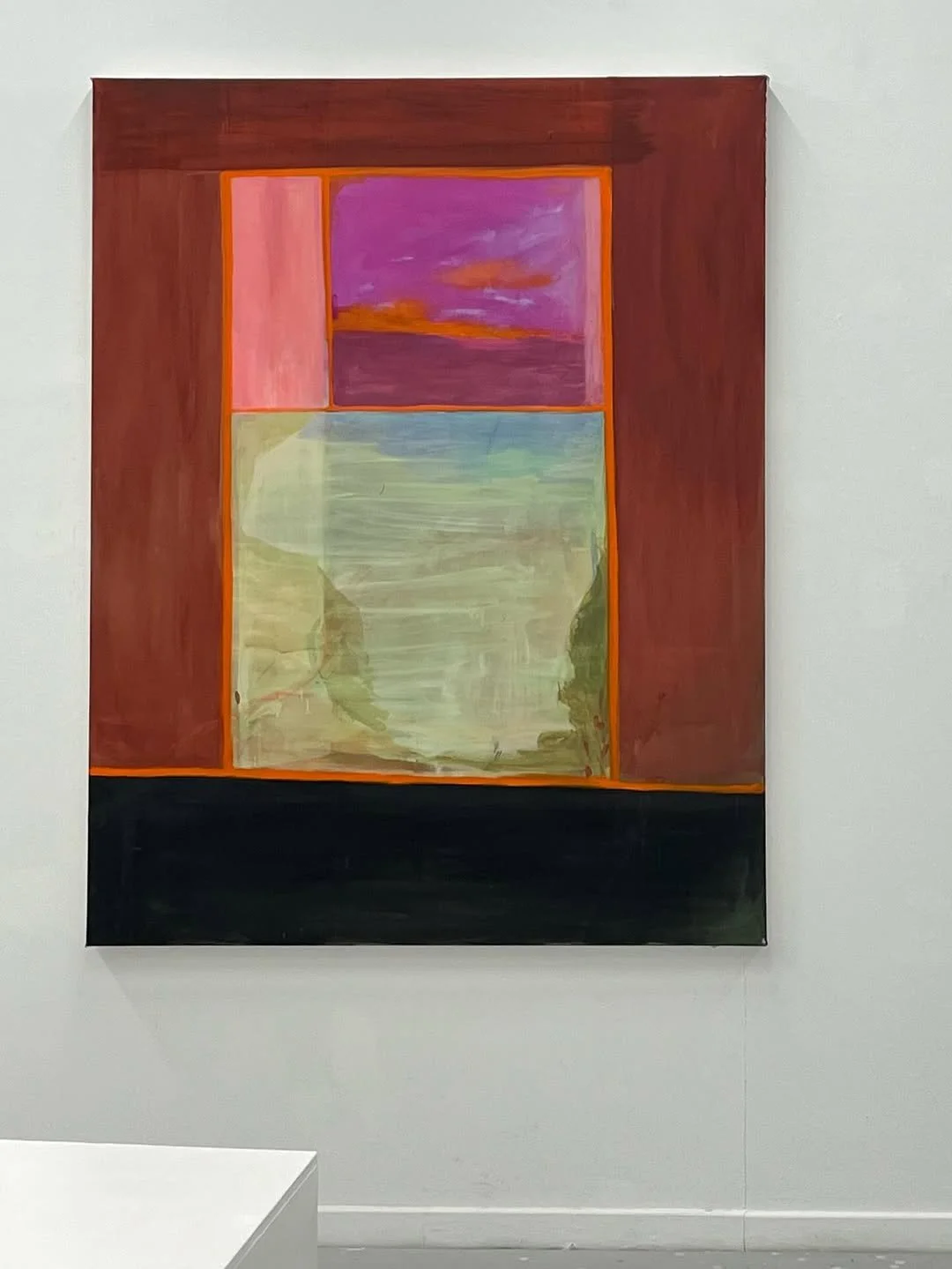
‘I wandered lonely as a cloud’, Oil and acrylic on canvas, 140 x 180 cm
PA: Could you briefly describe your creative process?
HMC: My creative process is constantly evolving. I’m currently undertaking a master’s, so I’m excited to see how this changes things. Mostly it begins with weeks of head-scratching, collecting images, moments of deep excitement and endless possibilities — then times when I’m frozen and have to battle with my internal dialogue. Then I force myself just to start somewhere.
Hopefully things start to work out intuitively, and all those ideas that are a huge cluster in my brain slowly start to present themselves. The excitement returns, a picture forms, and some part of me knows what it’s doing — and a thread begins to appear between the artworks.
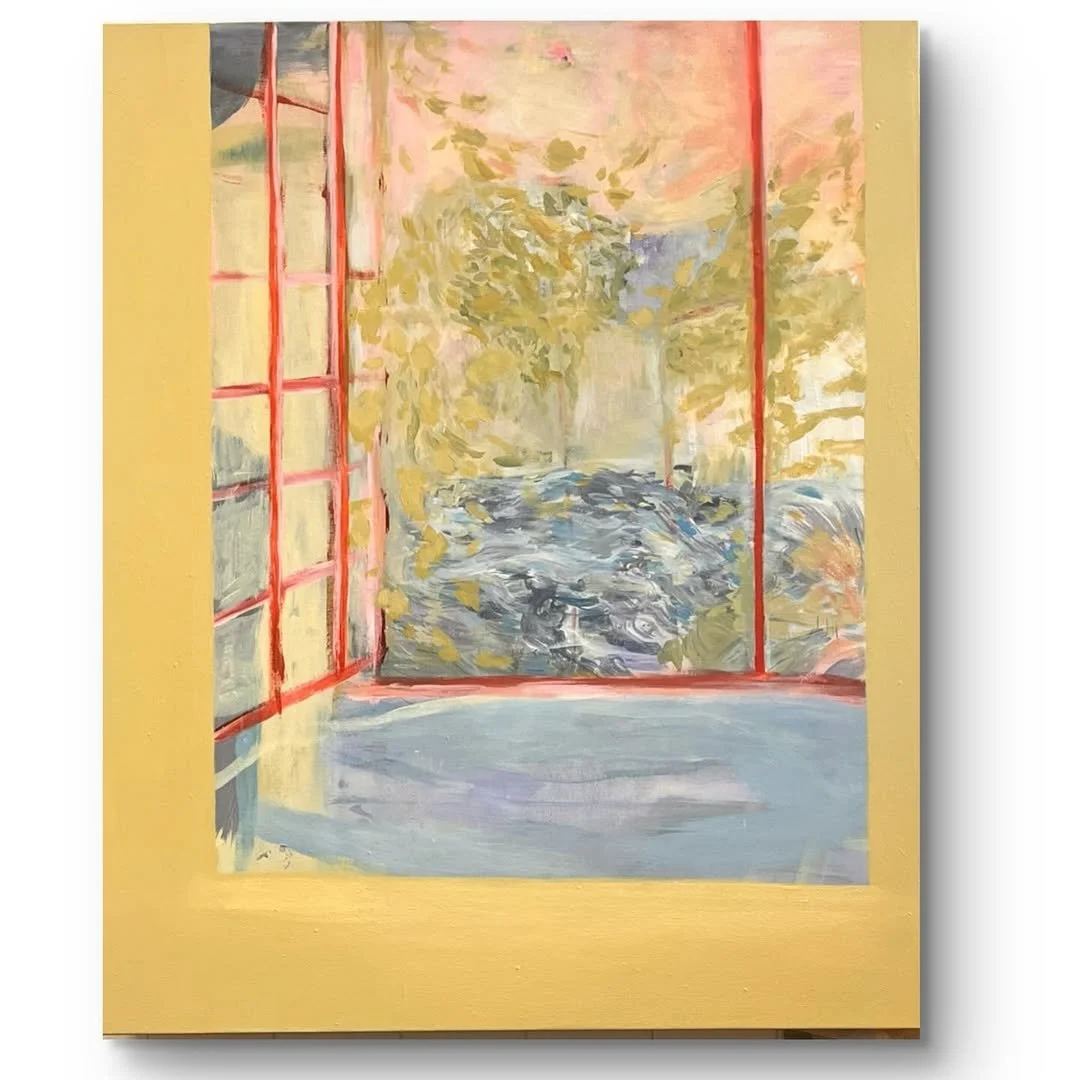
‘Ordinary days’, Oil on canvas,120 x 100 cm
PA: In your work, you explore how memories evolve over time. Are there specific memories you've returned to repeatedly in your work? Have they changed for you over time, visually or emotionally?
HMC: There are definitely specific memories that I’ve returned to repeatedly, often from my childhood. I think they’ve changed for me as they’ve become clearer — maybe because I’ve allowed myself to be more vulnerable. Visually, they’ve become more personal and emotionally less self-conscious.
PA: How does colour impact your painting process?
HMC: Yes, colours often lead the painting process for me. Sometimes I try not to use too many different colours — boundaries or challenges can be a good way to push things forward. I also have this beautiful little Japanese colour dictionary that I like to use if I’m having trouble with combinations or need a bit of inspiration.
If it’s not colour, then it’s usually shapes or something I’ve spotted that’s had an effect on me. Once these appear, I start to view them as interiors, or I’ll work with them until they mimic something tangible in my mind. I paint a lot of liminal spaces, which I often feel are actually reflections of myself — figuring out my past or the world around me.
PA: What part of your work as an artist has challenged you the most? How did you work through that?
HMC: I think that’s ongoing. Sitting back and doing research and reading, rather than being impatient and wanting to make something, is always a challenge. Time management and comparing productivity to others too — learning that there’s a method in my madness and to trust the process.
Staying focused, building on my skills, and recognising that being good at your craft takes time and patience. Dipping into the right resources and not being too hard on yourself.
If you’re not filling the well — having conversations, watching films, seeing shows, reading, being in nature — you’re not going to have a lot to say. When it feels like such a luxury and you think you should really just be working hard in the studio, reminding yourself that it’s all part of the process can be tough.
So yes, I guess the greatest challenge is having to do all of that rather than just paint!
PA: How do you approach collaboration as an artist? Can you describe a really great collaboration and how it progressed or surprised you?
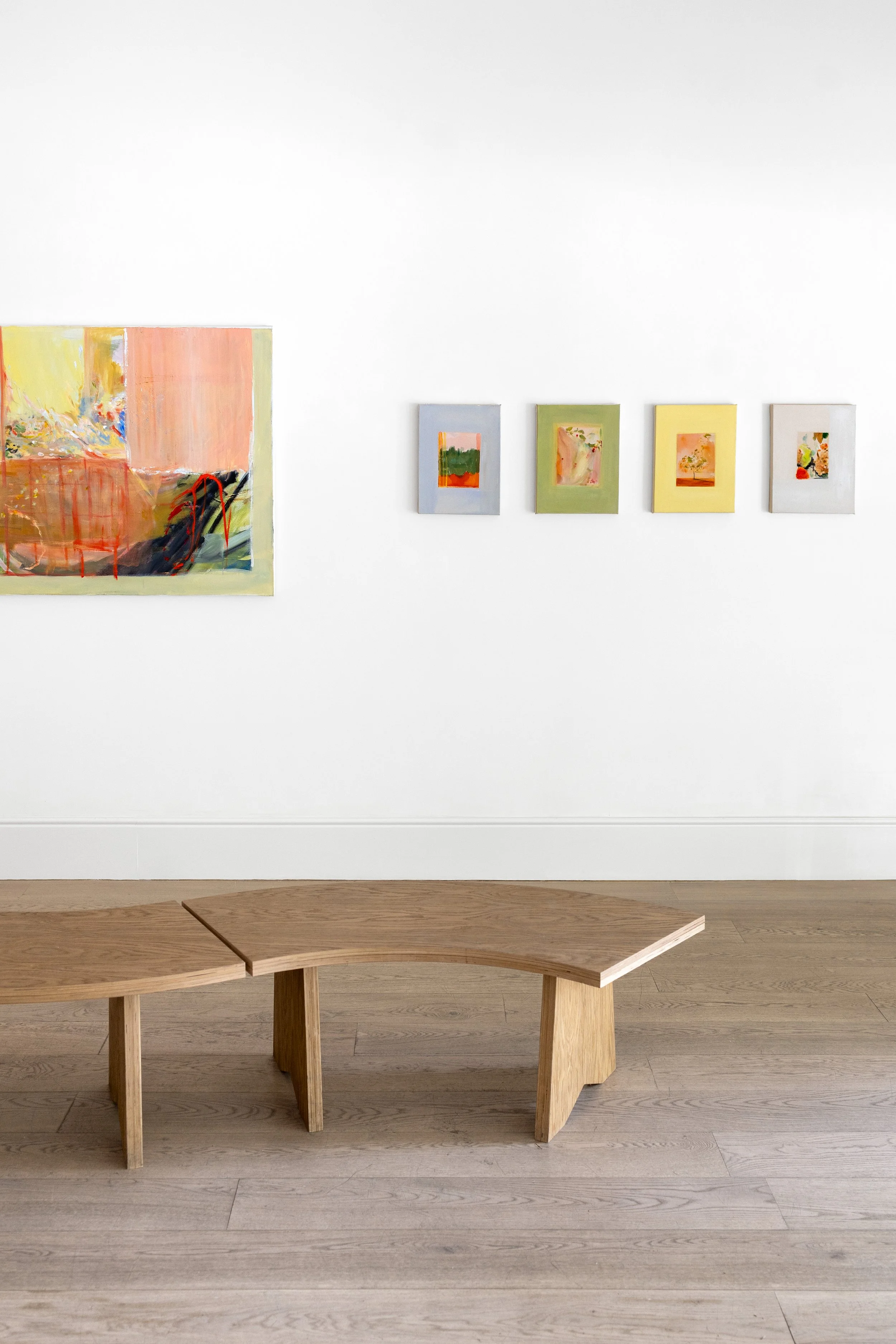
HMC: I think I approach collaboration with a willingness to learn and listen, and also to build my confidence and skill in this area. In March this year, I collaborated for the second time with artist Amanda Seibak. This time we curated a show together in Glasgow, presenting the work of Mia Konoki, a Greek artist based there.
We approached the show and our new endeavour as an opportunity from an artist’s perspective, where we prioritised the artist’s needs. This resulted in a sold-out show, and Mia’s career has since reached incredible new heights, with galleries from all over the world eager to work with her. It was a pivotal moment for her, and to have had a small part in that has been exhilarating.
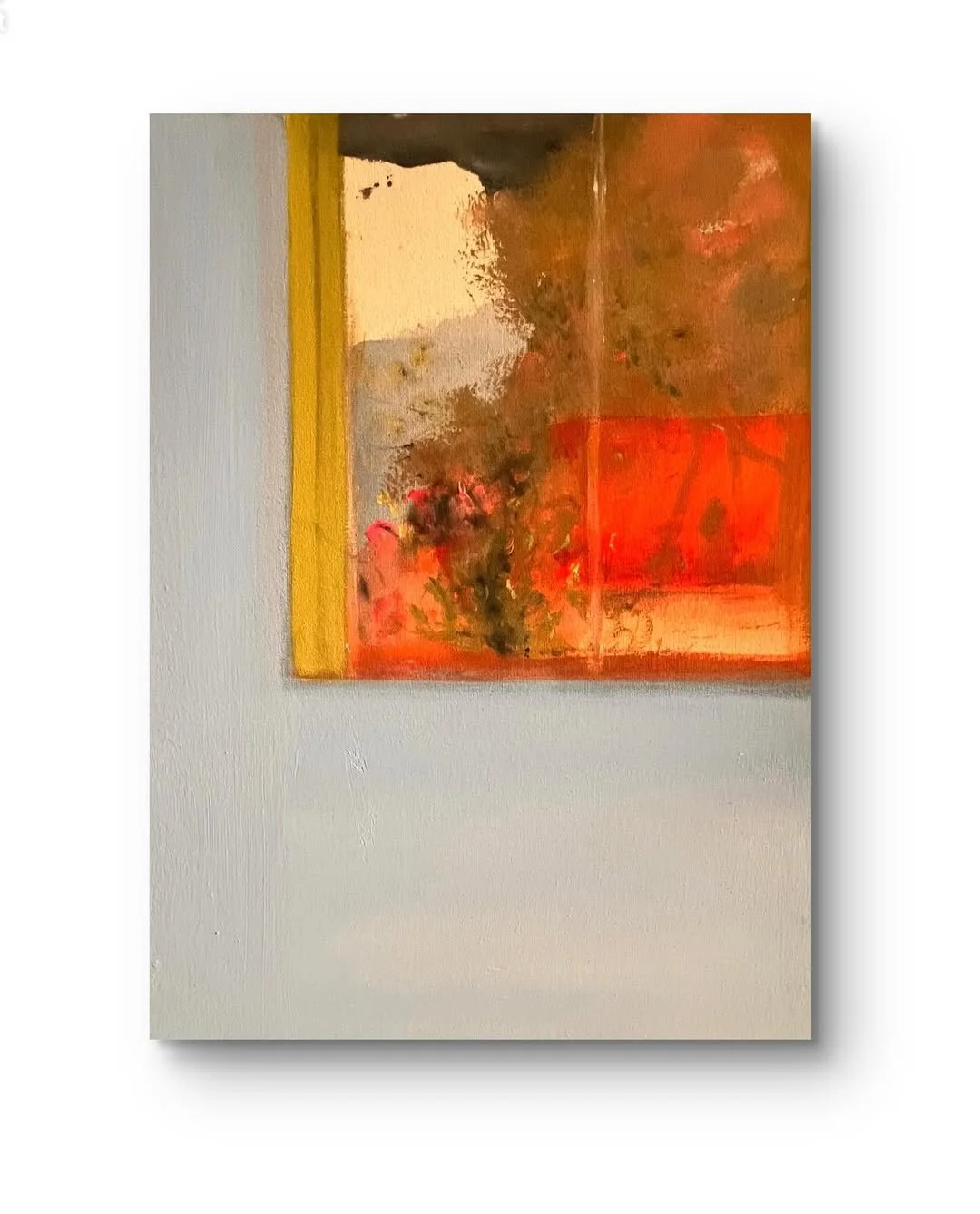
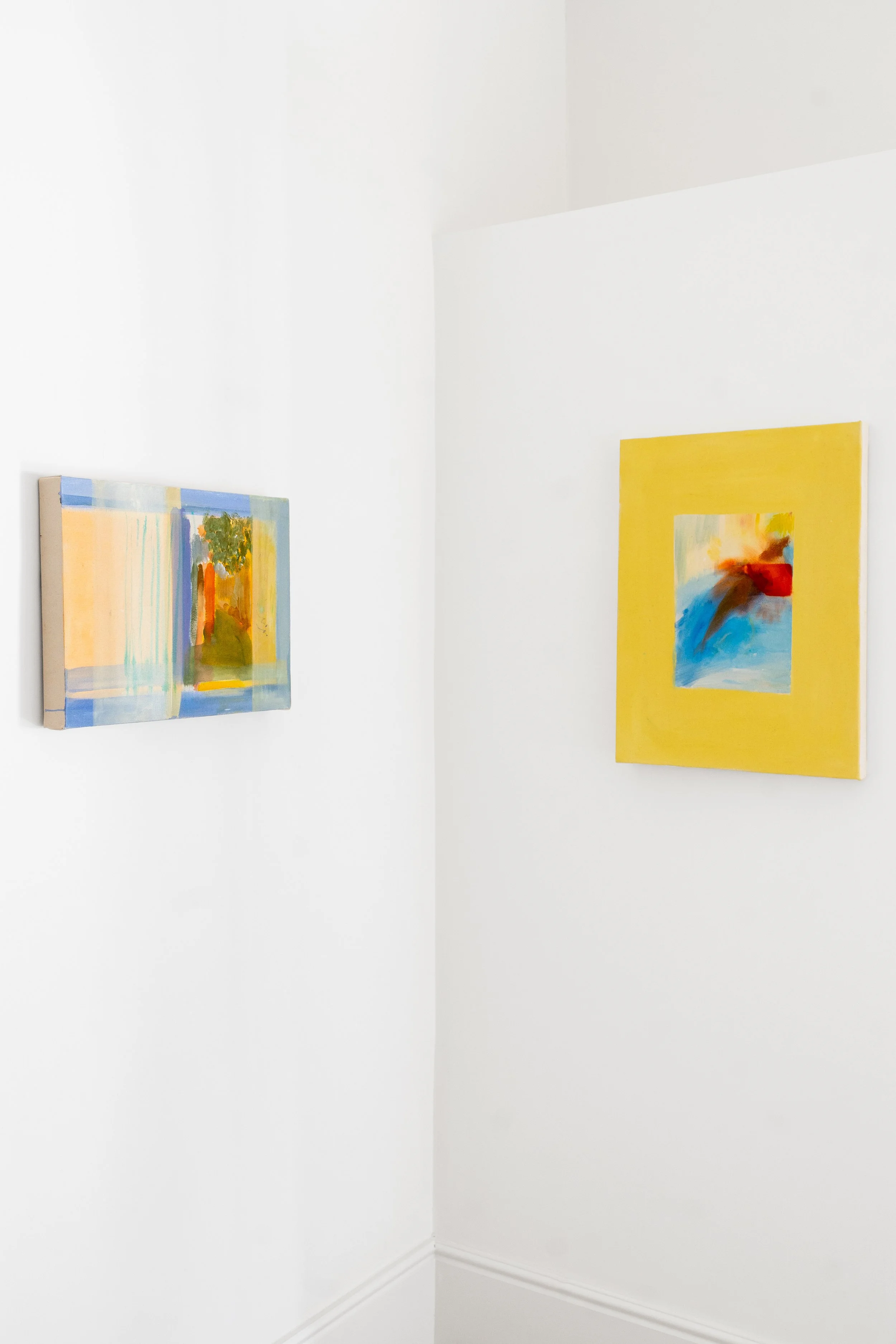
‘Lacken’, Acrylic on canvas, 46 x 62 cm
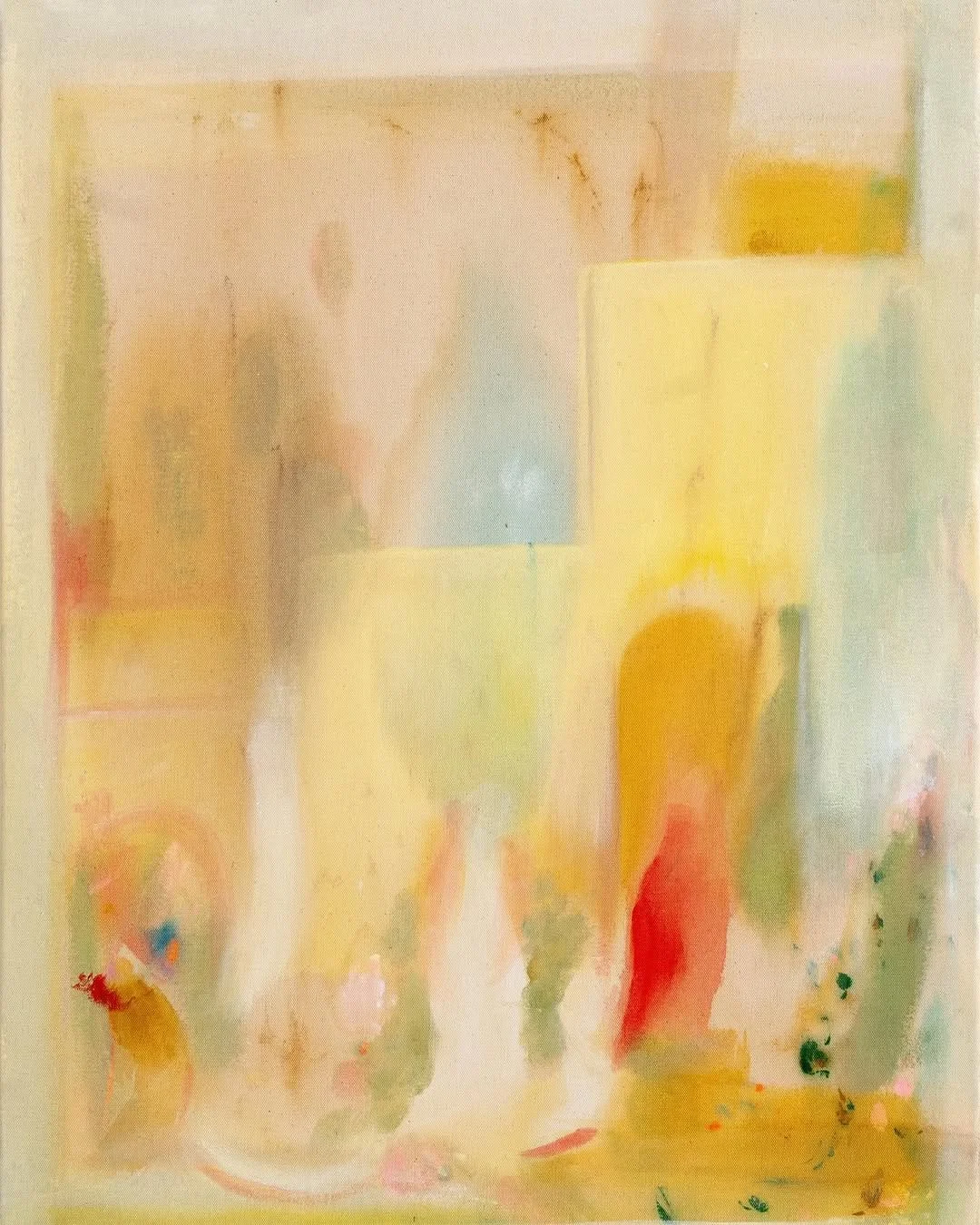
‘Chasing Shadows’, Oil on canvas, 61 x 46 cm
PA: What has been the most pivotal experience for you that’s influenced your practice?
HMC: The most pivotal moment for me so far has been my time at Turps Banana Art School in London. After being and working alone in a home studio for two and a half years before that, I had gotten a bit lost. The program at Turps reintegrated me into an artistic community that I’d been missing.
It reminded me of the importance of community, communication, and feedback. I’d forgotten how valuable it is, for me personally, to have a commute each day — that break, and the chance to step outside the four walls in your brain.

‘Hi blue sky’, ‘Sweet pea’, ‘Almost Nothing’, ‘Bus stop daffodil’, 40.5 x 30.5 cm
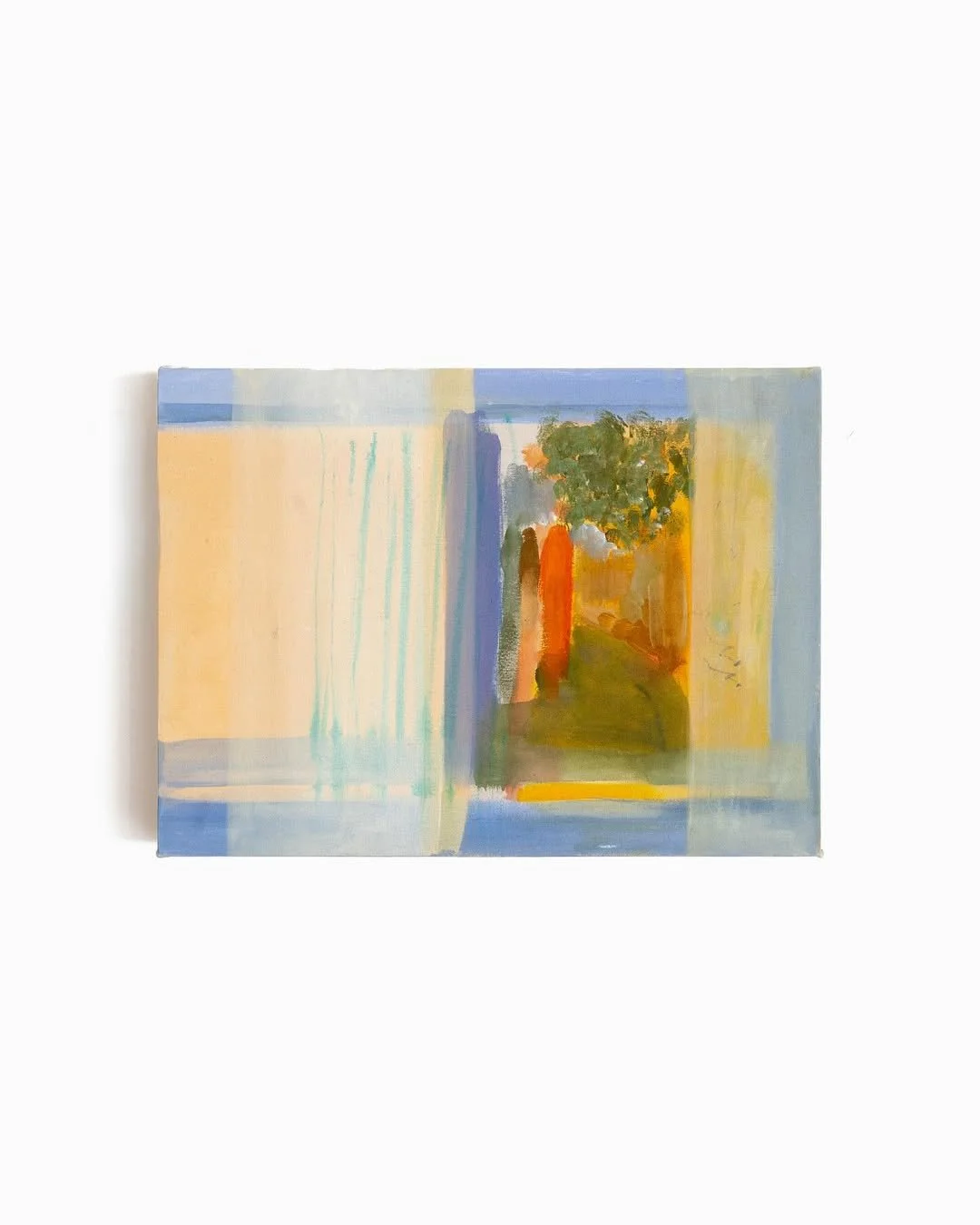
‘Hey Moon’, Acrylic on canvas, 50.5x38.5cm
PA: What’s next for you, how would you like to see your work develop?
HMC: What’s next for me is that I’ve just begun a master’s in fine art, so the next two years are super exciting. I’m looking forward to seeing how my painting develops through research. I also hope to make some sculpture and installation pieces — ideas that have been floating around in my head for a while now finally feel possible.
I’m really excited about this new community, the mentorship, and the structure it will bring. It’s something I’ve never had before, having no formal higher education, and I hope I’ll bring a fresh perspective because of that.
PA: Lastly, what advice would you offer to emerging artists, particularly abstract artists?
HMC: The advice I’d give to emerging artists is: do the open calls, do the residencies, keep a notebook with you at all times for ideas and sketching, trust the process, and figure out how you work best. Don’t be afraid to share your work with others — feedback only helps you get better.
Find inspiration everywhere and be brave. It’s scary putting yourself out there, but I’m passionate about art being accessible to everyone. So just make lots of bad work if you need to — the good stuff will come.
This year, Helen will lead workshops in abstract painting in collaboration with Paréa Ada. We’re so excited to see how this collaboration progresses. More details to come!
