
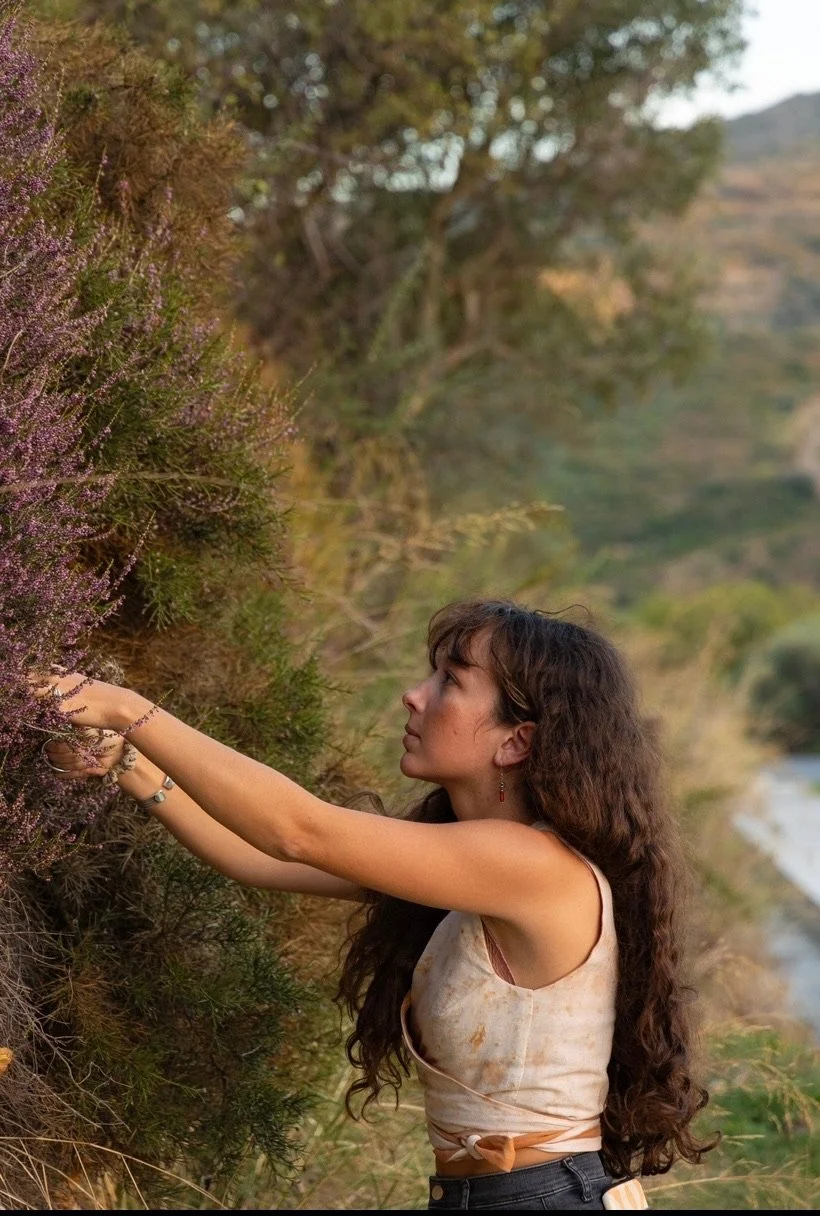
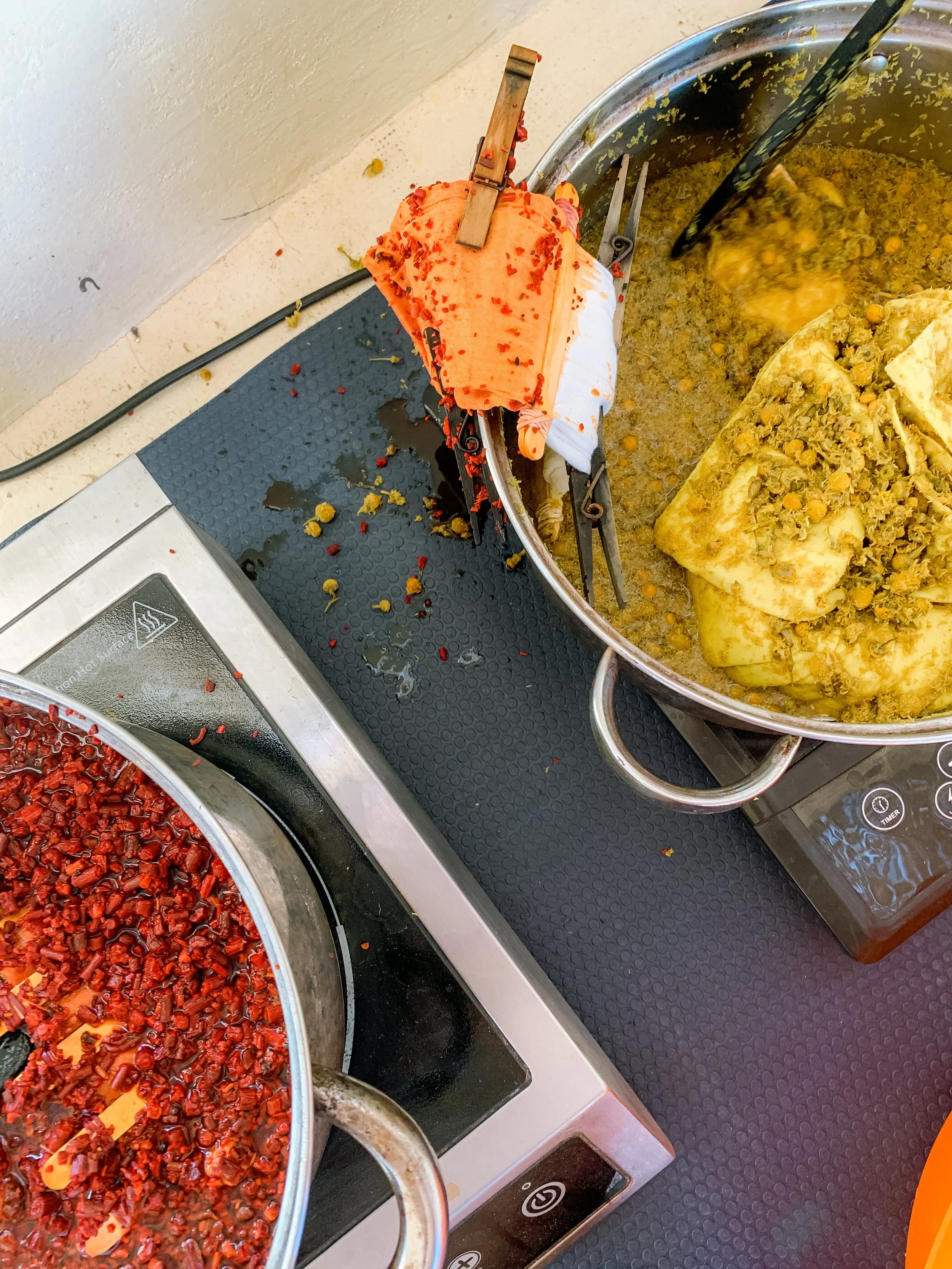
This February, I joined textile artist, designer and natural dye specialist Christiana Vardakou at her studio in Athens for a workshop in natural dyeing. After recent years spent learning from painters and immersed in the visual arts, this was both a nostalgic and transformative experience. Watching pigments emerge from raw materials like chamomile flowers and madder roots, learning about the chemistry, I was reminded of my first years at art school - when I first fell in love with colour through the medium of fabric.
At their core, natural dyeing and painting are two branches of the same tree. While a dyer infuses colour into fibre, a painter layers colour onto a surface, both are engaged in turning raw, earth-bound materials into a visual language.
I spoke to Christiana about her creative process, what inspires her and how collaboration and teaching inform her practise.
PA: When did you first fall in love with textiles?
CV: Since I was a child, I was always drawn to drawing and painting - I knew quite early on that I wanted to go to art school. At the same time, I didn’t see myself in fine art, as I wanted my work to have a purpose, to be used and lived with.
That’s why I chose to do a foundation year, which became a really defining experience for me. I realised that textiles could sit at the intersection of all these worlds - interior, fashion, and art - and become the medium through which I could express myself.
When I went on to study my BA at Chelsea College of Arts, I chose to specialise in print and dye because it allowed me to continue working in a way that felt natural to me - through drawing and painting. In the first two years of my degree, most of my work was focused on digital prints and screen printing, translating my illustrations into repeat patterns and textile surfaces for interiors and fashion.
PA: How would you describe your creative process?
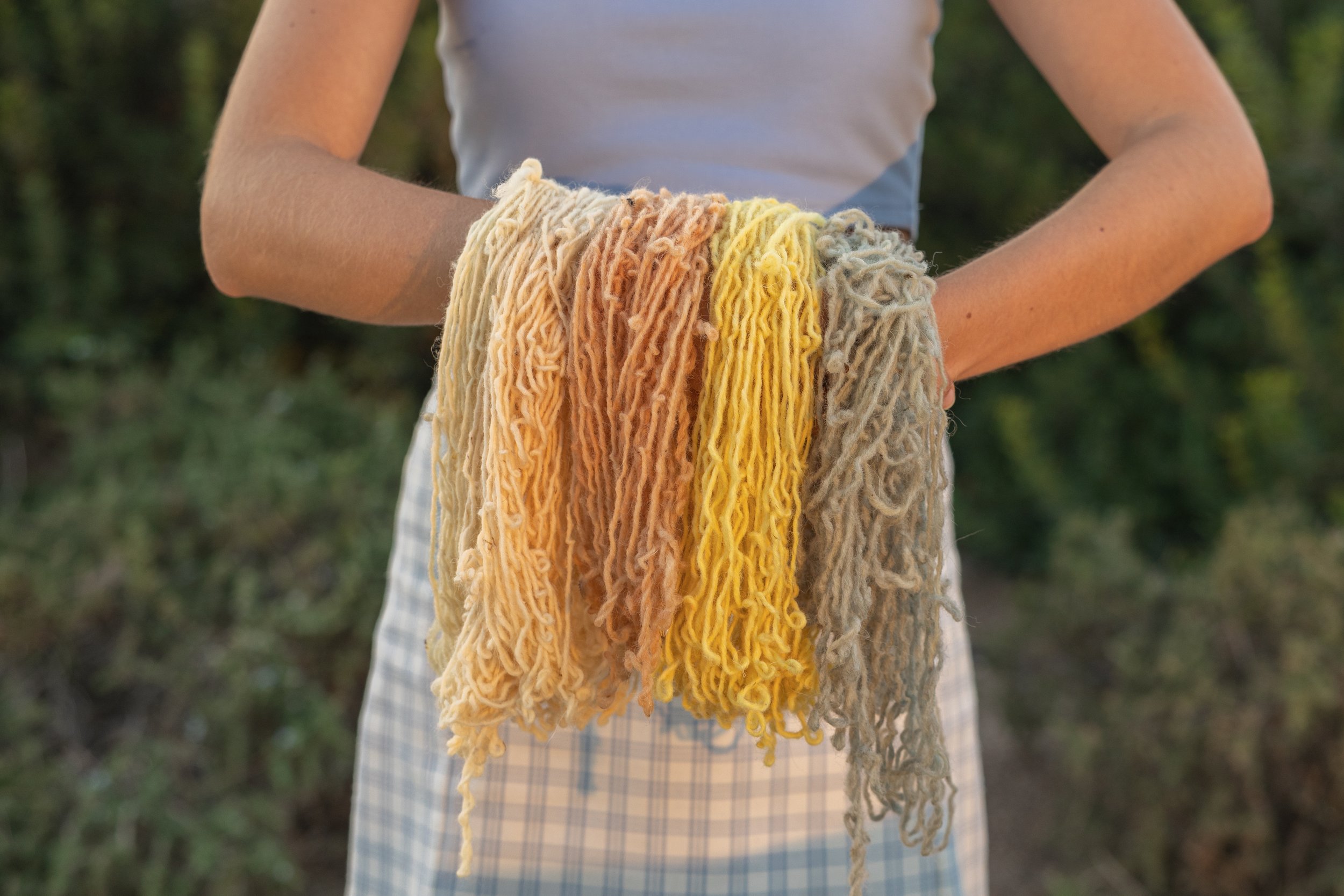
CV: During my second year at Chelsea College of Arts, we had a project focused on sustainability, and that’s when I first started experimenting with natural dyes. I was immediately drawn to the colours and the way they naturally harmonise with each other.
At the time, I began working with what was around me. I was living in Brixton, so I would collect plants from my garden, gather materials on my walk from home to university, and even use kitchen waste. That experience shaped the way I work to this day - my environment became, and still is, my biggest source of inspiration.
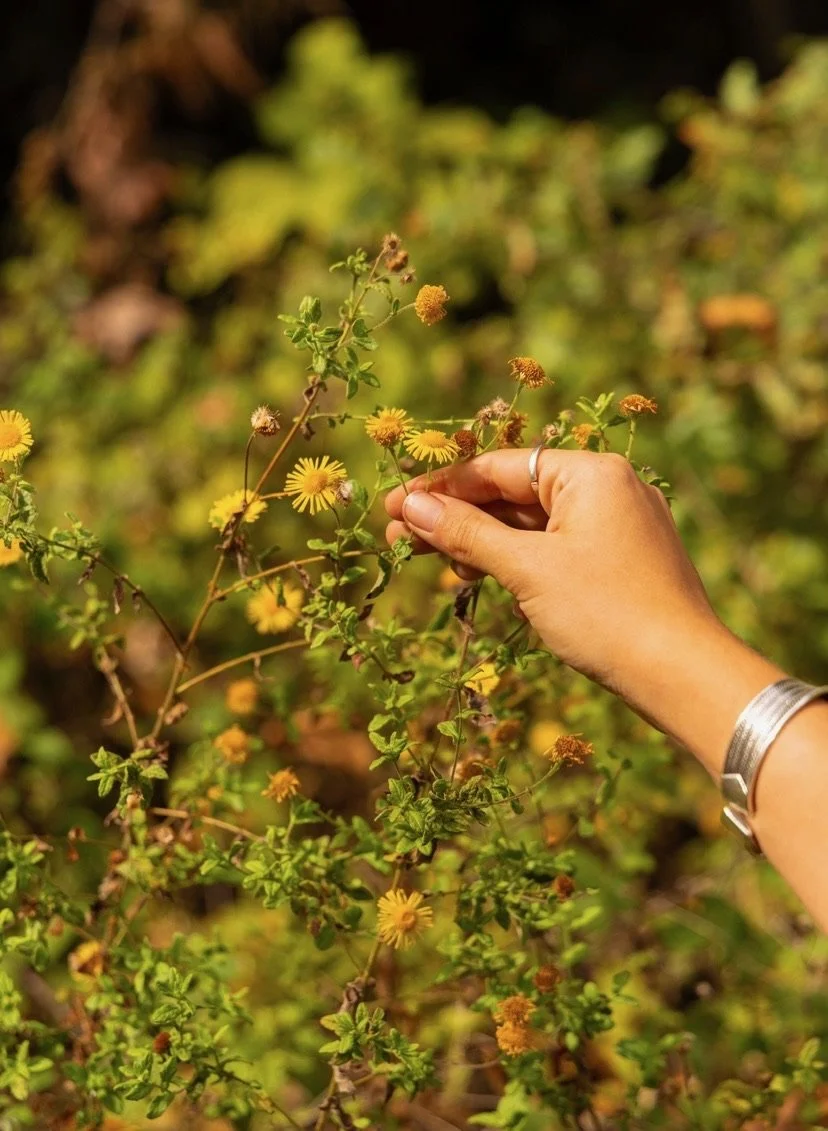
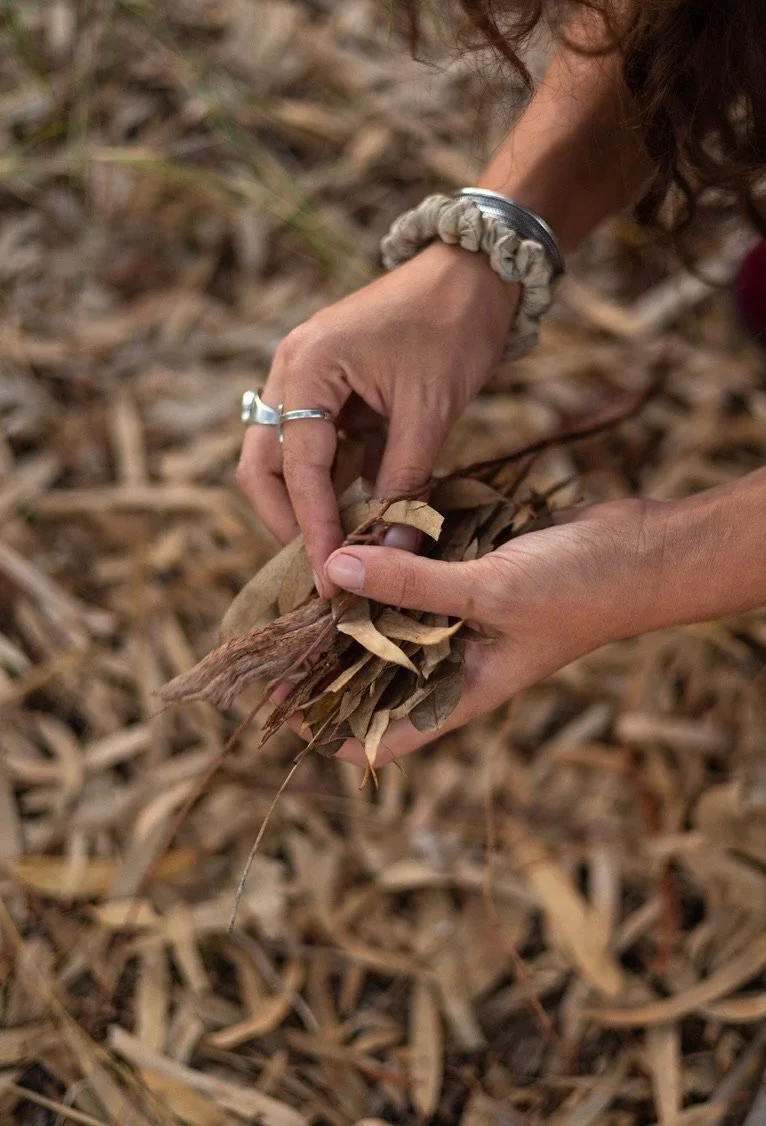
I love foraging, going on long walks and hikes with my dog, and collecting plants to later experiment with in the studio. There’s something very grounding about that process: being outside, observing, gathering, and then transforming those materials into colour and form.
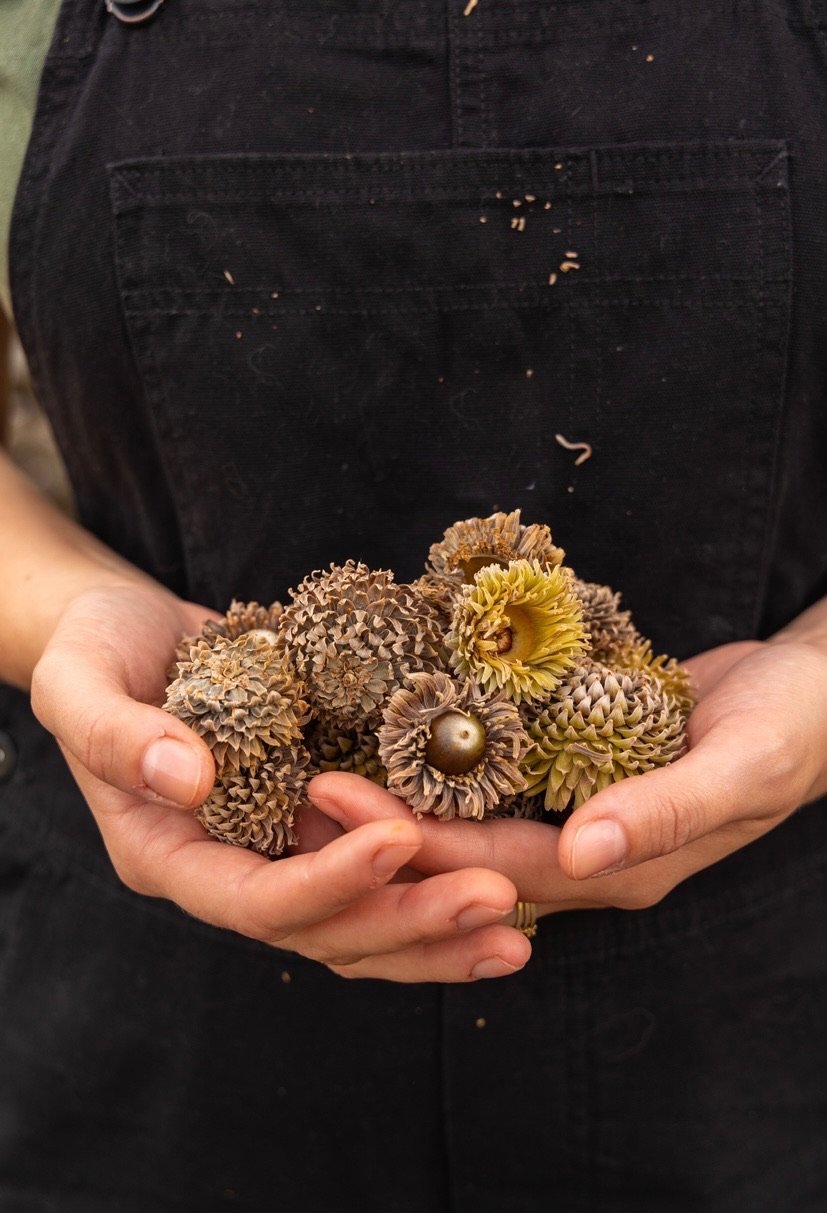
Travel has also played a huge role in shaping my practice. After my studies, a long trip to Southeast Asia inspired me to open my own natural dye studio in Athens. Later, a trip to Japan led me to explore indigo and shibori techniques more deeply. More recently, my time in Guatemala inspired me to rethink my process again: encouraging me to fully exhaust my dye baths and create lake pigments, which I now use for drawing on both paper and textiles.
Ultimately, I’m inspired by what’s around me - both in my immediate environment and through the places I travel to. My work is a reflection of those experiences, constantly evolving through observation, movement, and experimentation.
PA: You’ve mentioned being inspired by the principles of ‘Emotionally durable design’, how does this influence your creative process?
CV: I was first introduced to Emotionally durable design during my third year at Chelsea College of Arts, where it became the focus of my dissertation. I was immediately drawn to the idea of creating something deeply personal - designing specifically for a client, collaborating with them, and bringing to life something they had imagined themselves.
I realised that when someone receives an object they’ve dreamt of - something they’ve contributed to creatively - they naturally form a stronger connection to it. They’re more likely to value it, care for it, and keep it over time, even pass it down. This way of thinking continues to shape my practice. I’m very interested in creating pieces that people form real relationships with - objects that are not just owned, but kept and cherished.
I think a lot about longevity, both physical and emotional. Working with natural dyes reinforces this philosophy. The colours are alive, they change, soften, and evolve over time. The textile ages with the wearer or the space it lives in, becoming part of their story.
PA: As a designer, who or what influences you the most?
CV: I’m deeply influenced by artists like Anni Albers and Sonia Delaunay. I really admire how they approached textiles not just as craft, but as a serious artistic medium they pushed boundaries between art, design, and everyday life. Their use of colour, abstraction, and material continues to inspire the way I think about composition and surface.
On a more personal level, my grandmother has been an important influence in my life. Her relationship with plants and flowers: her care, her attention, and the way she always has flowers around her, it has shaped the way I see and work with the natural world today.
PA: In a world driven by scale and growth, how do you balance the commercial needs of a business with the desire to remain small, sustainable and intentional?
CV: This has been one of the most challenging aspects of my practice. In Greece, there is still limited awareness around made-to-order production and sustainability in fashion. Things have definitely improved since I first started, but I would say we are still a few years behind compared to other countries.
When I opened my studio, I was the only natural dye studio in Athens. As demand slowly grew, I began working with wholesale, which helped my brand expand and reach a wider audience. But at the same time, it shifted the pace of my work. Wholesale meant larger quantities, faster production, and less space for the intentional, slow process that I value.
Last year, it reached a point where it became overwhelming. I realised I was primarily working to meet wholesale demands, and I experienced a level of burnout. That was a turning point for me. I had to reflect on why I started in the first place, and what kind of practice I truly wanted to build. I came back to my original intention: to work in a made-to-order way, rooted in the principles of emotionally durable design.
I’ve since stepped away from most wholesale collaborations and started focusing on educating my audience: helping people understand sustainability, the value of slower processes, and what it means to create something intentionally. It hasn’t been an easy decision. Choosing to step away from growth in the traditional sense - scale, volume, constant expansion - was difficult. But over the past few months, returning to this way of working has made me feel more aligned and fulfilled. I’m happier, and I can see that the work I’m creating now carries more intention, more care, and a deeper connection to my values.
PA: You collaborate with architects, hotels, and fashion brands. What is this collaborative process like in general?
CV: Since making the decision to slow down, work more intentionally, and step away from wholesale, I’ve also chosen to focus more on collaborations. I truly love collaborating, it’s a very important part of my practice.
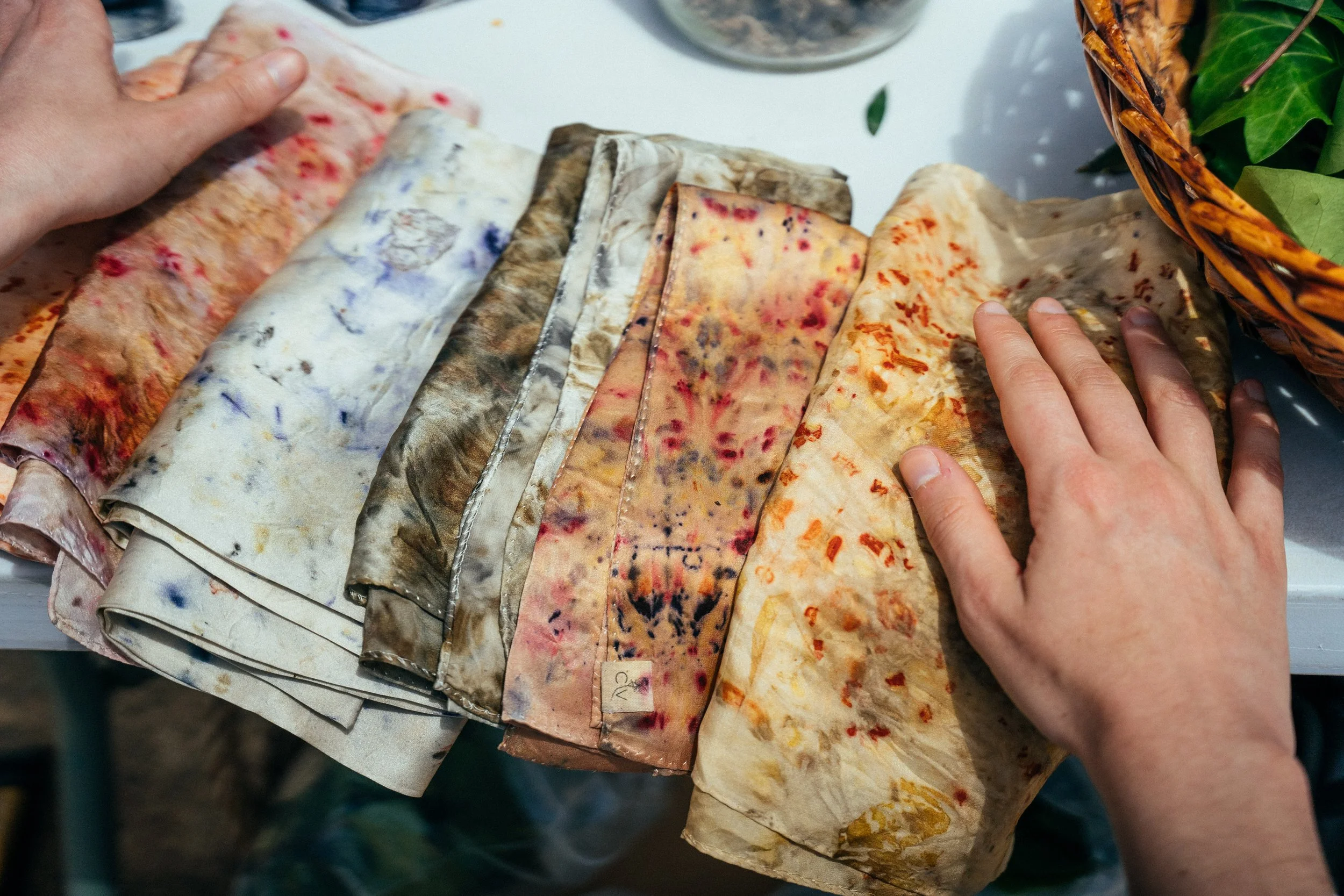
Each project is different, but they all begin in the same way: through dialogue. Whether I’m working with architects, hotels, or fashion brands, the process always starts with conversation: understanding their vision, their space, and their identity. I spend a lot of time listening, trying to understand what they want to express, what feeling they want to create, and how my work can translate that into textiles.
There’s a lot of exchange in this phase of ideas, references, samples, and gradually something begins to take shape. I also really enjoy the intuitive side of it. Sometimes, before we even discuss colours, I find myself imagining and guessing what they might be drawn to. And I always like to create at least one sample that we haven’t discussed: something that feels very “me,” but that I sense they will connect with.
Interestingly, those are often the ones that resonate the most. What I love about collaborations is that they push me beyond my usual way of working. I often find myself creating things I wouldn’t have made otherwise, whether that’s a new object, an unexpected colour combination, or experimenting with a different material or technique. In that sense, collaborations keep my practice evolving. They challenge me, inspire me, and allow me to step outside my own perspective while still staying true to my creative language.
PA: You frequently teach workshops in natural dyeing, what is your favorite part about teaching?
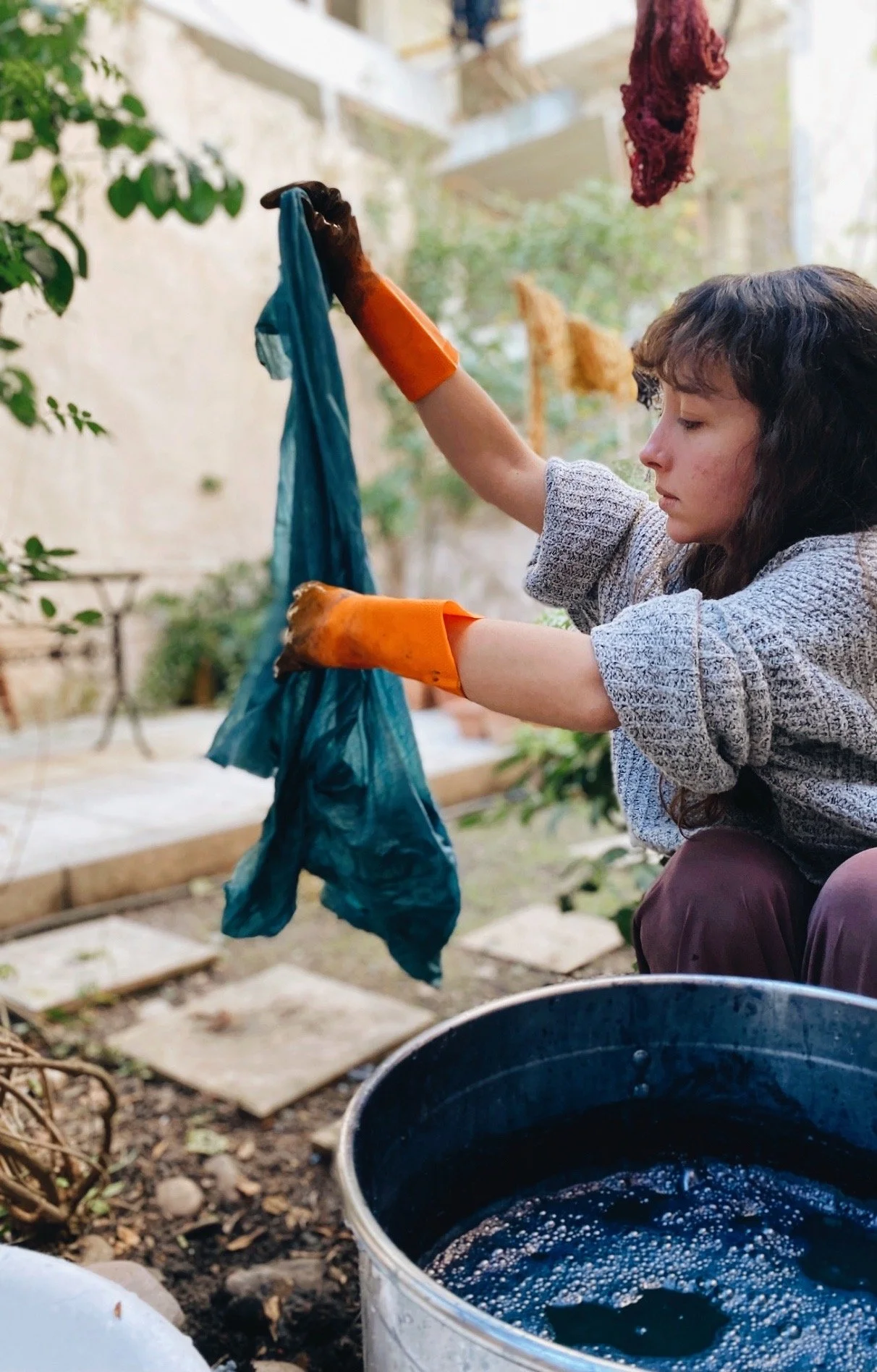
CV: My favourite part is always the moment we reveal the final pieces. In natural dyeing, there’s such a strong sense of surprise and discovery. Seeing people experience it for the first time, opening their bundles and saying “wow,” or creating an avocado dye bath and realising it produces soft pinks, it is really special. I love that sense of enthusiasm and wonder. It’s equally inspiring when more experienced natural dyers join my workshops. Often, something unexpected will happen, or someone will try a plant they haven’t used before, and we all become mesmerised by what nature can create. There’s always something new to learn, no matter your level.
On a more personal level, when I teach outside of Athens, I like to begin with a hike, collecting plants from the area we’re in. It becomes a shared experience, but also a learning moment for me. Almost every time, we end up working with something I haven’t used before, and that sense of discovery keeps the process alive and exciting.
PA: What can attendees expect from your workshops in September?
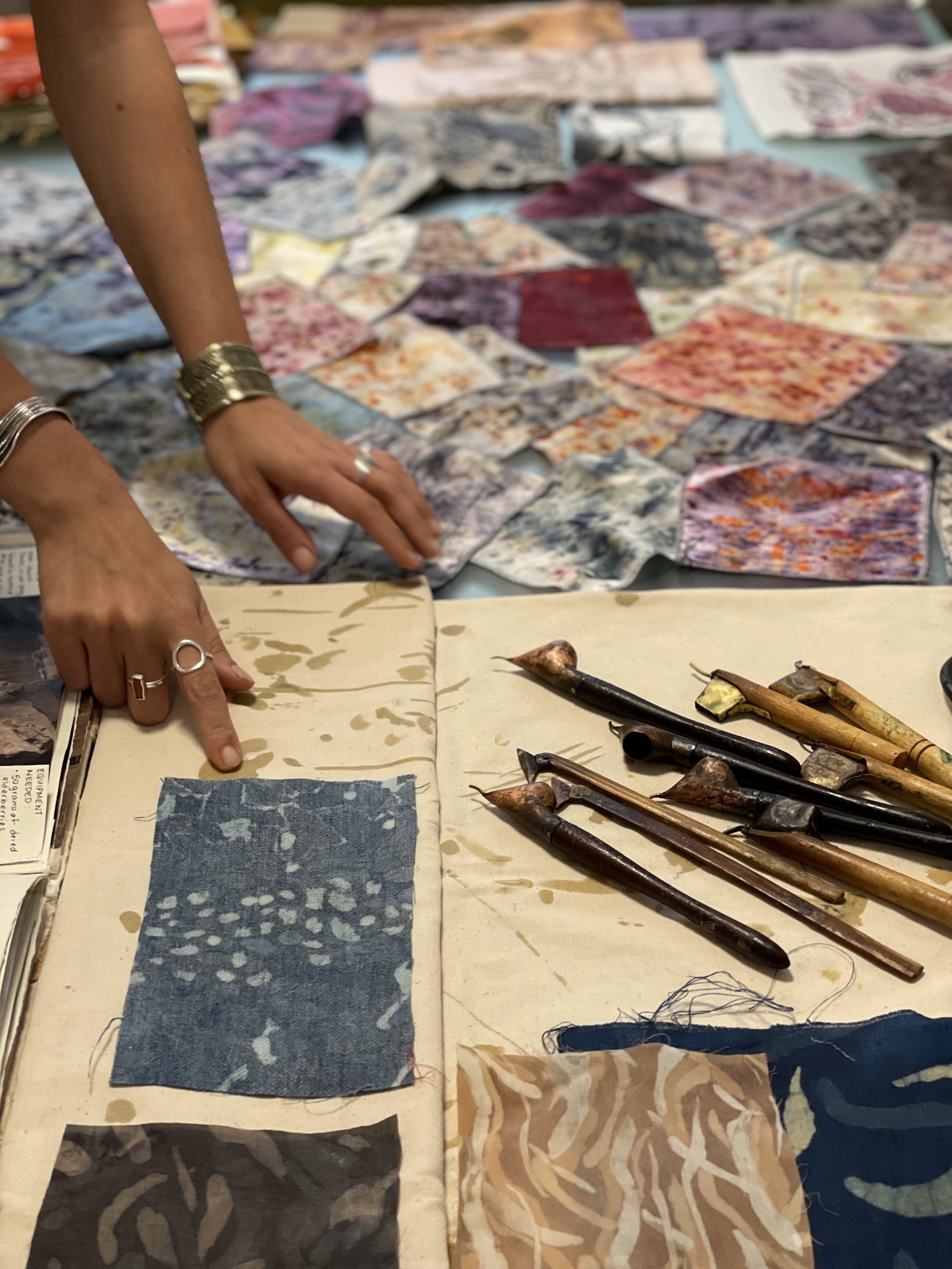
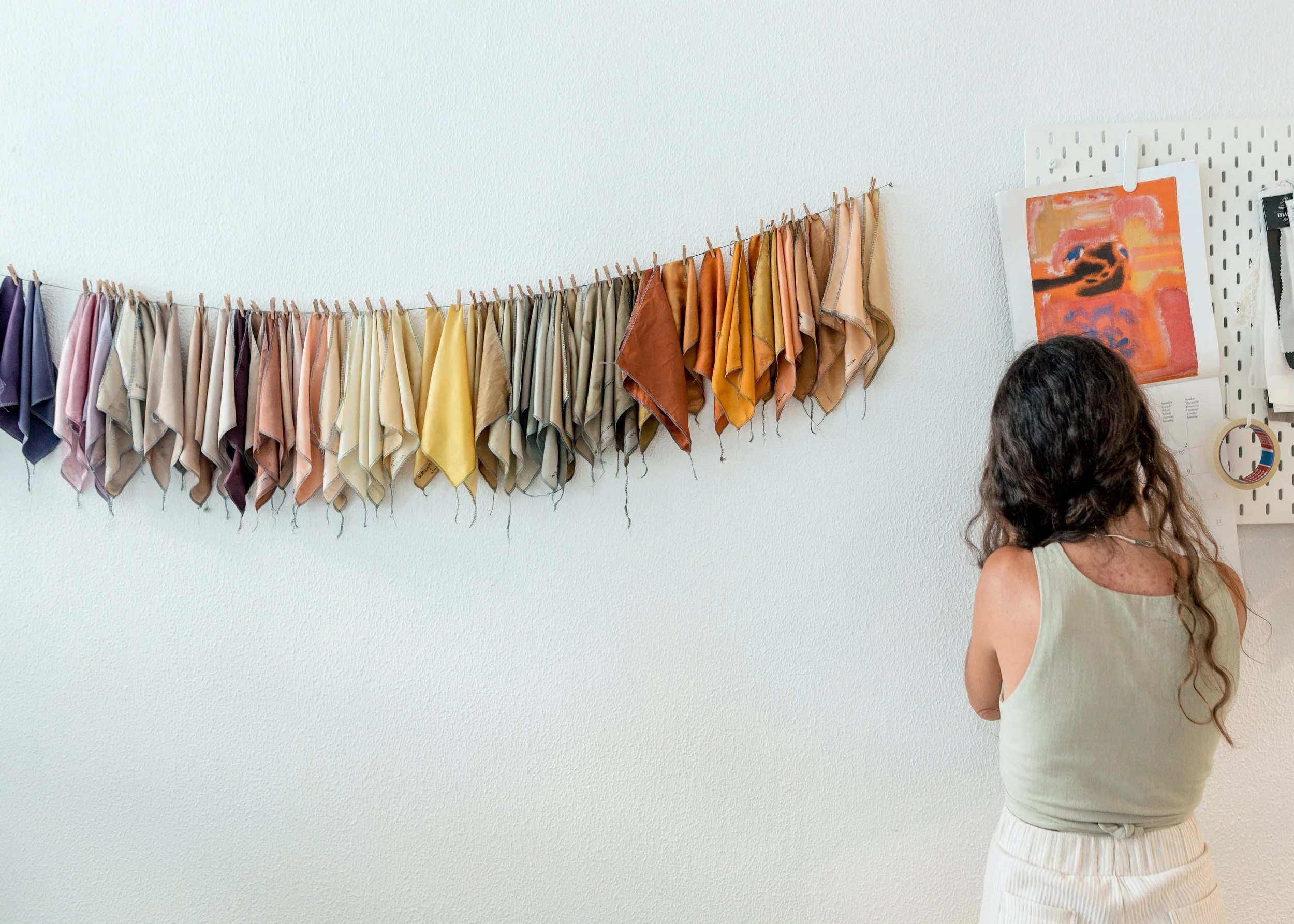
CV: During the September retreat, I’ll be teaching an introduction to natural dyeing, designed to give participants both a strong foundation and space to experiment. We’ll be working with four plants sourced from the local area, exploring how each one behaves and what colours it can produce. Alongside that, we’ll experiment with three different mordants, allowing us to create a palette of twelve distinct colours from the same set of plants. It’s a beautiful way to understand the depth and variation that natural dyeing can offer.
We’ll also be introducing batik as part of the workshop, combining resist techniques with natural dyes to create more layered and expressive pieces. What I’m most excited about is seeing the batik pieces that participants will create. Because the retreat is designed for artists, I know everyone will bring their own visual language and way of thinking, and that always leads to really unexpected and inspiring results.
Overall, the workshop is about exploration and discovery - understanding the process, but also allowing space for intuition and surprise.
Our Paréa Ada artist retreat will take place at Eona in the village of Nenita on Chios island, Greece from September 14th - 20th. The week will include daily guided painting workshops with abstract artist Helen McCusker, workshops in foraging and natural dyeing with Christiana, plenty of free time to use the art studio for personal practise and lots of time to hang out at the beach of course!
Applications are now open here. Learn more about the retreat structure and pricing here.
