
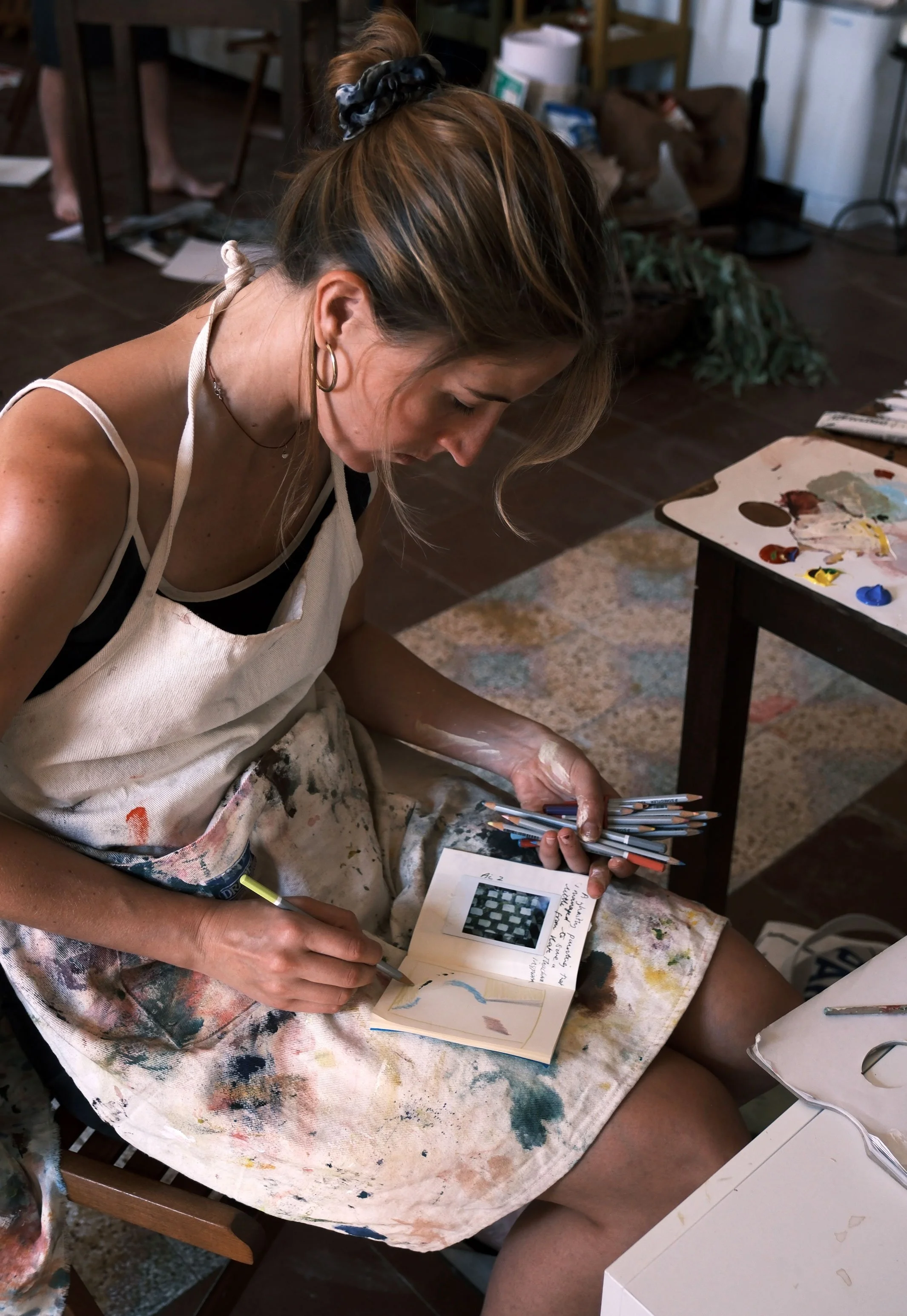
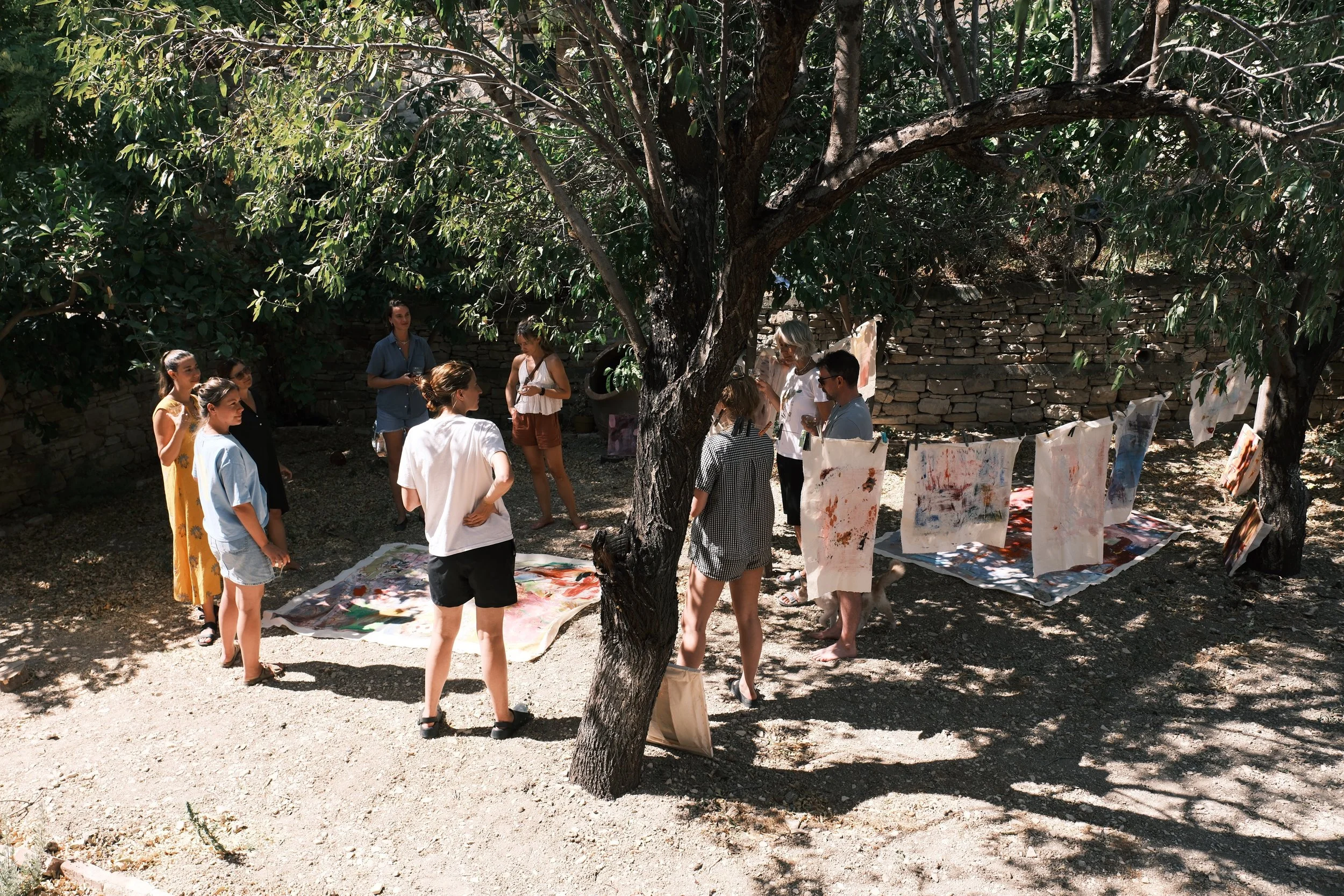
I first met Ilona last month on the Greek island of Chios, at Paréa Ada’s first art retreat. As an intimate group of just nine participants, we had time and space to get to know each other in the context of shared meals, beach time and daily abstract art practice.
During our time on Chios, I learned about Ilona’s path to abstract art. Originally trained in costume design, she transitioned into classical, observational drawing and finally to fine art painting. I was struck by her confident approach to our daily painting sessions - quietly methodical and technically assured, yet remarkably attuned to her own emotional inner world and brave enough to approach each exercise instinctively, without a ‘plan’.
Following the retreat, I caught up with Ilona to delve deeper into her work, revisit that week on Chios and learn more about how her experience has impacted her practice as an artist.
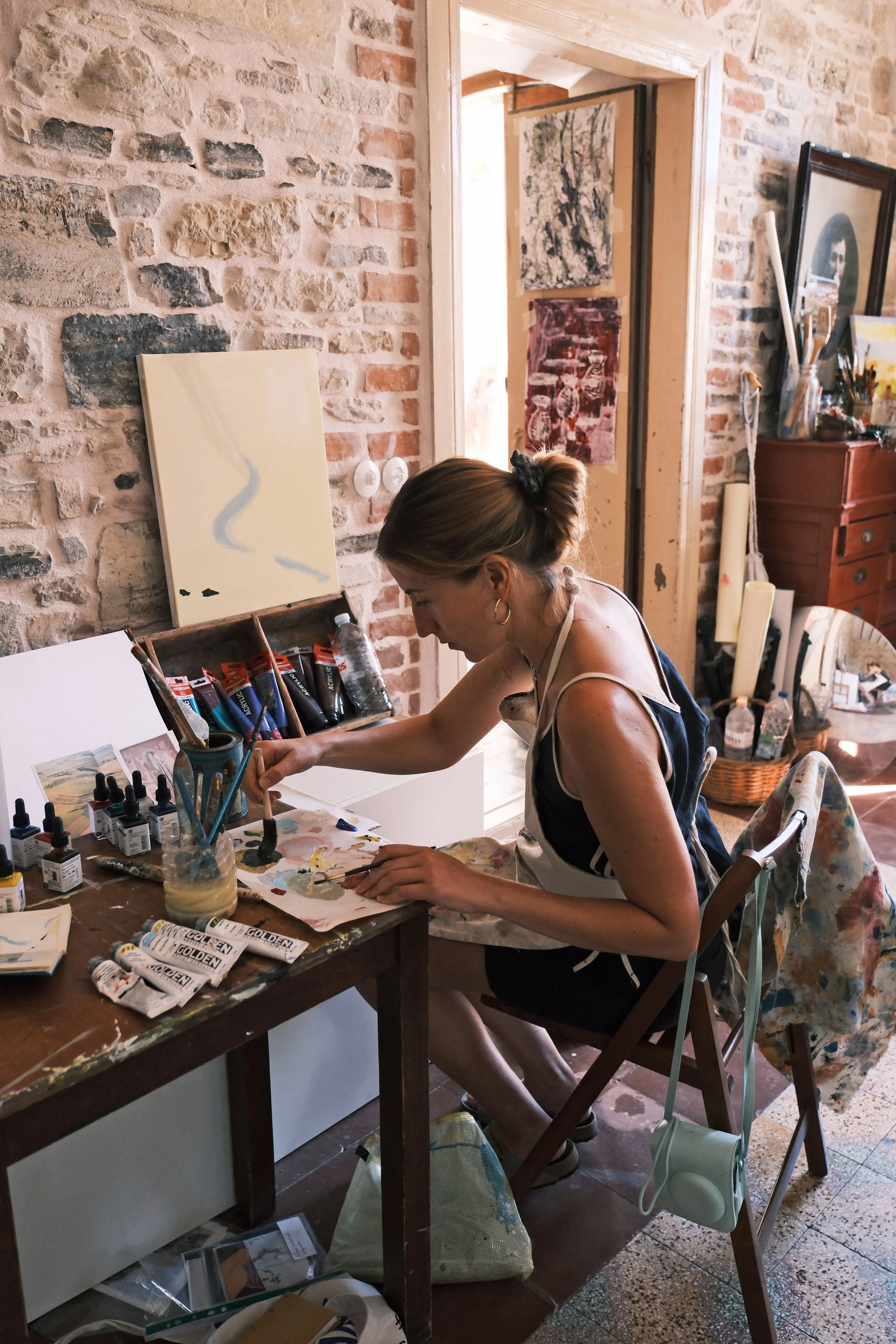
PA: You have a diverse educational background having studied Performance Costume at Edinburgh College of Art and classical observational drawing at the Royal Drawing School. What ultimately drew you to painting and abstract art?
IR: My journey into painting evolved quite naturally from my earlier studies. During my degree in Performance Costume at ECA, I often found myself most drawn to the expressive side of the course, creating large-scale character drawings and paintings rather than focusing on the more technical aspects of pattern cutting and sewing. Looking back at those early designs, I can see that painting was already beginning to emerge as a natural direction for me, although it took time to find my way there.
My time at the Royal Drawing School, where I spent a great deal of time life drawing and working figuratively, had a significant influence on my early paintings. I became particularly interested in exploring the female form, and during a period when I felt somewhat disconnected from myself, painting it became a cathartic process. There was something about the stillness and serenity I was searching for that I could begin to explore through the figure.
Gradually, my work began to shift. Through experimenting with composition, colour and line, I found myself becoming less interested in capturing the figure itself and more interested in the feeling it evoked. The transition into abstraction happened quite naturally as I began to realise that I didn’t need to represent something recognisable to express what I wanted to convey.
What drew me to abstraction was this freedom to move beyond representation and explore something more instinctive and intangible. I became increasingly interested in how a particular feeling might find its expression through colour, gesture, texture and the movement of paint. Rather than setting out to create a predetermined image, I could allow the painting to unfold through the process itself.
I’m interested in creating a space where intuition can lead, where the act of painting becomes a way of connecting with something internal that isn’t always easy to articulate in words.
I’m interested in creating a space where intuition can lead.. painting becomes a way of connecting with something internal that isn’t always easy to articulate in words.
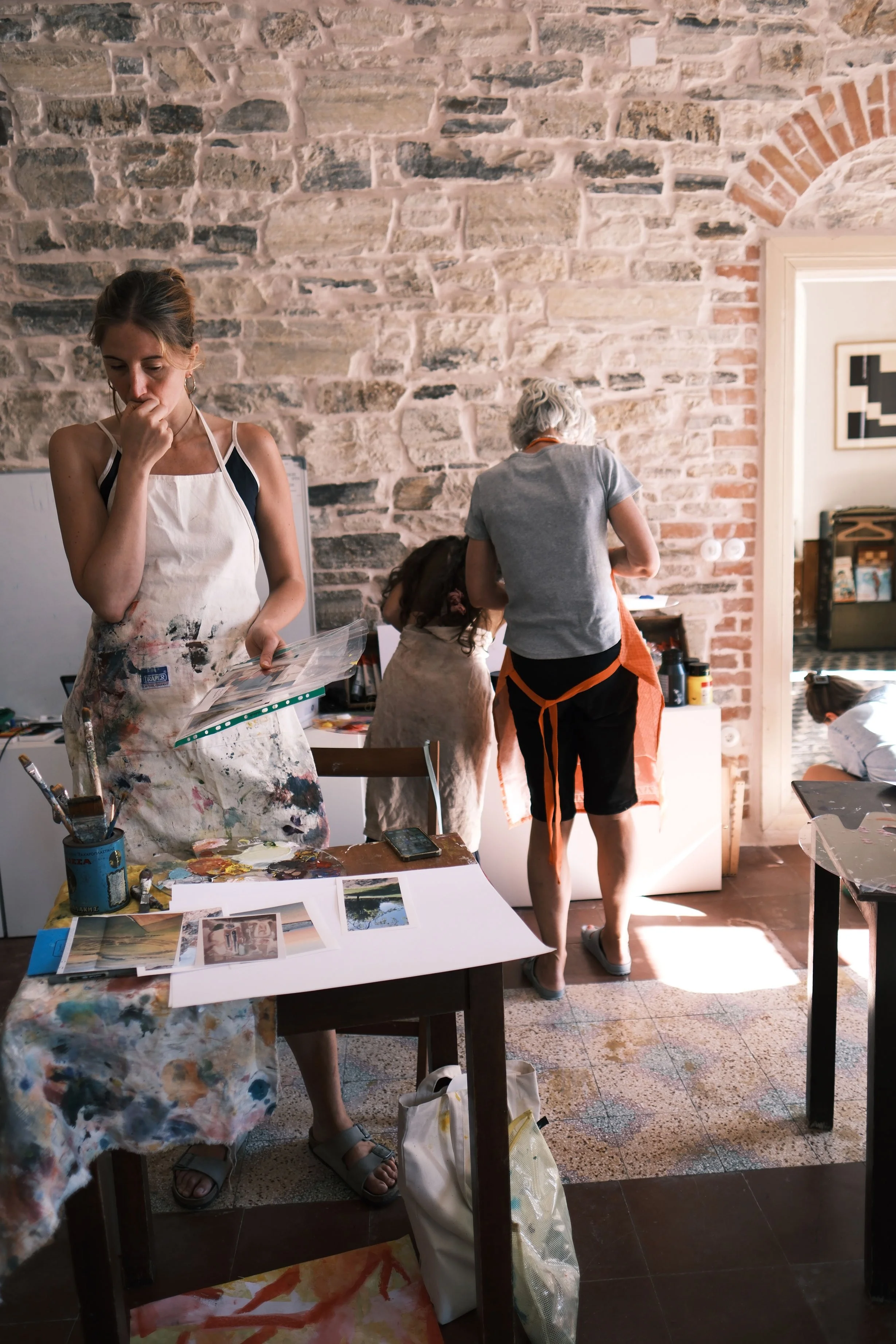
PA: Do you have a sustained, regular source of inspiration or does it often change?
IR: I think my most consistent source of inspiration is an awareness of my inner world, although the thoughts, feelings and experiences that find their way into my work are always changing. Sometimes a particular colour, a combination of shapes or a feeling I can’t quite articulate becomes the starting point for a painting. I’m interested in following these instincts and seeing where they lead, rather than working towards a predetermined outcome.
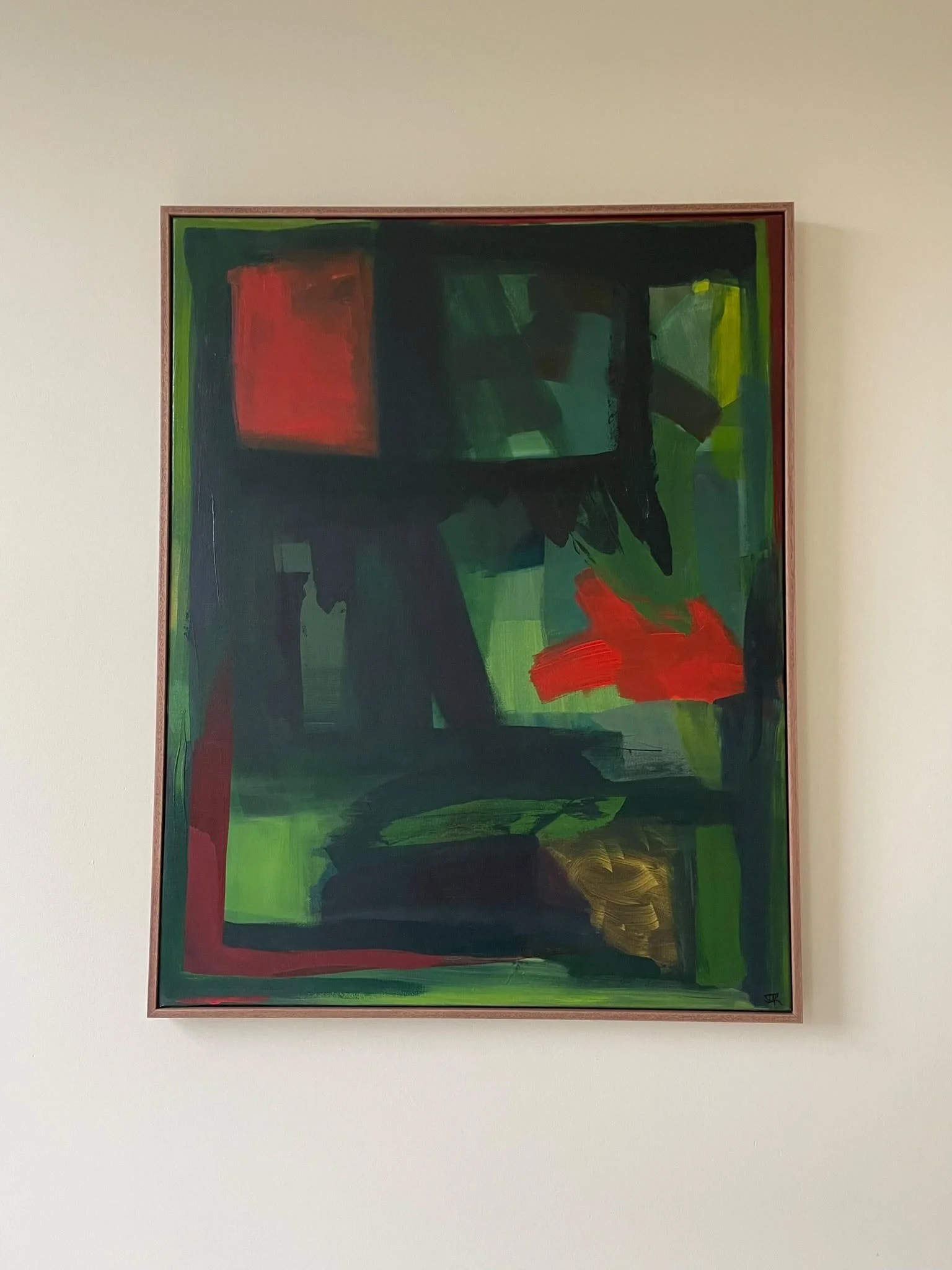
‘Raw greens’, October 2025, Acrylic on canvas, 74 × 94cm
PA: How has your artistic process developed or changed since setting up your studio in London in 2015 until now?
IR: Since moving into my first studio in London in 2015, my paintings have become larger and more expressive, and my process increasingly intuitive. I’ve grown more comfortable with uncertainty, allowing a painting to evolve through the act of making it and recognising how an unexpected mark or apparent mistake can open up an entirely new direction.
My process still involves a balance between spontaneity and reflection. Some paintings emerge in a few hours, while others need to be left and revisited over several sittings. I think the biggest change has been learning to trust this process, to step back when necessary, let go of control and remain open to what might emerge.
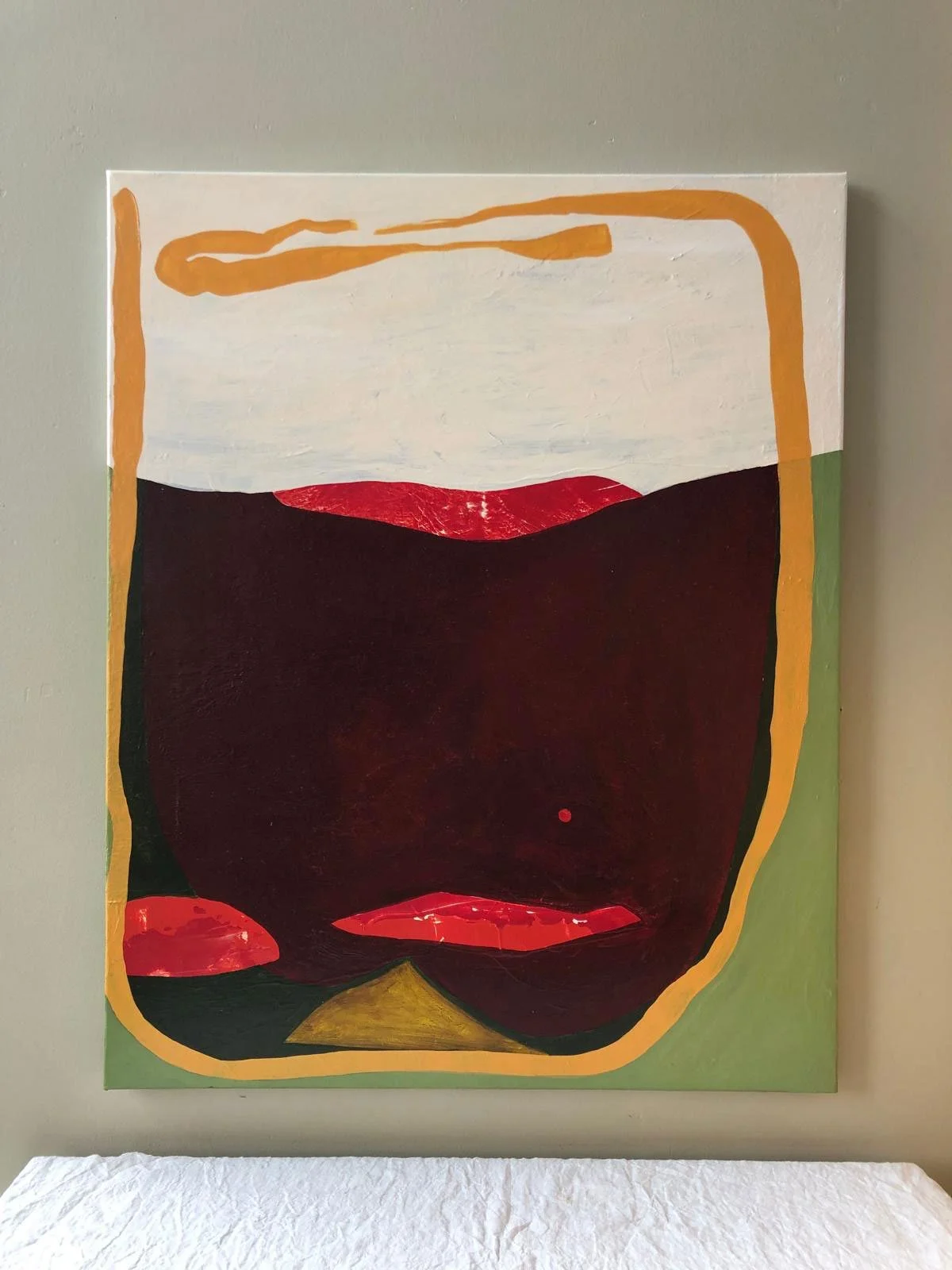
‘Scoop-me-up’, August 2023, 60 × 75 cm
PA: Your practice is rooted in developing an awareness of your inner world. What daily routines, or environments, help you tune into that awareness?
IR: I think having time to myself is important, particularly alongside motherhood and teaching. Both of which are such outward facing roles. With a young child life can feel wonderfully full but also very absorbing. The studio offers me a space to slow down, turn my attention inwards and reconnect with myself.
I don’t necessarily begin with a clear intention or a particular feeling I want to express. Often, it’s through the physical act of painting, sometimes I might start with a photo or an image of something that catches my attention, but this is usually just a starting point and the painting can evolve in a completely different direction. Once immersed in the process, I can enter a flow state where I’m less conscious of directing every decision and more able to respond instinctively.
I also value the space to step away from a painting and return to it with fresh eyes. Sometimes it’s only through that distance that I begin to understand what the work needs.
Once immersed in the process, I can enter a flow state where I'm less conscious of directing every decision and more able to respond instinctively.
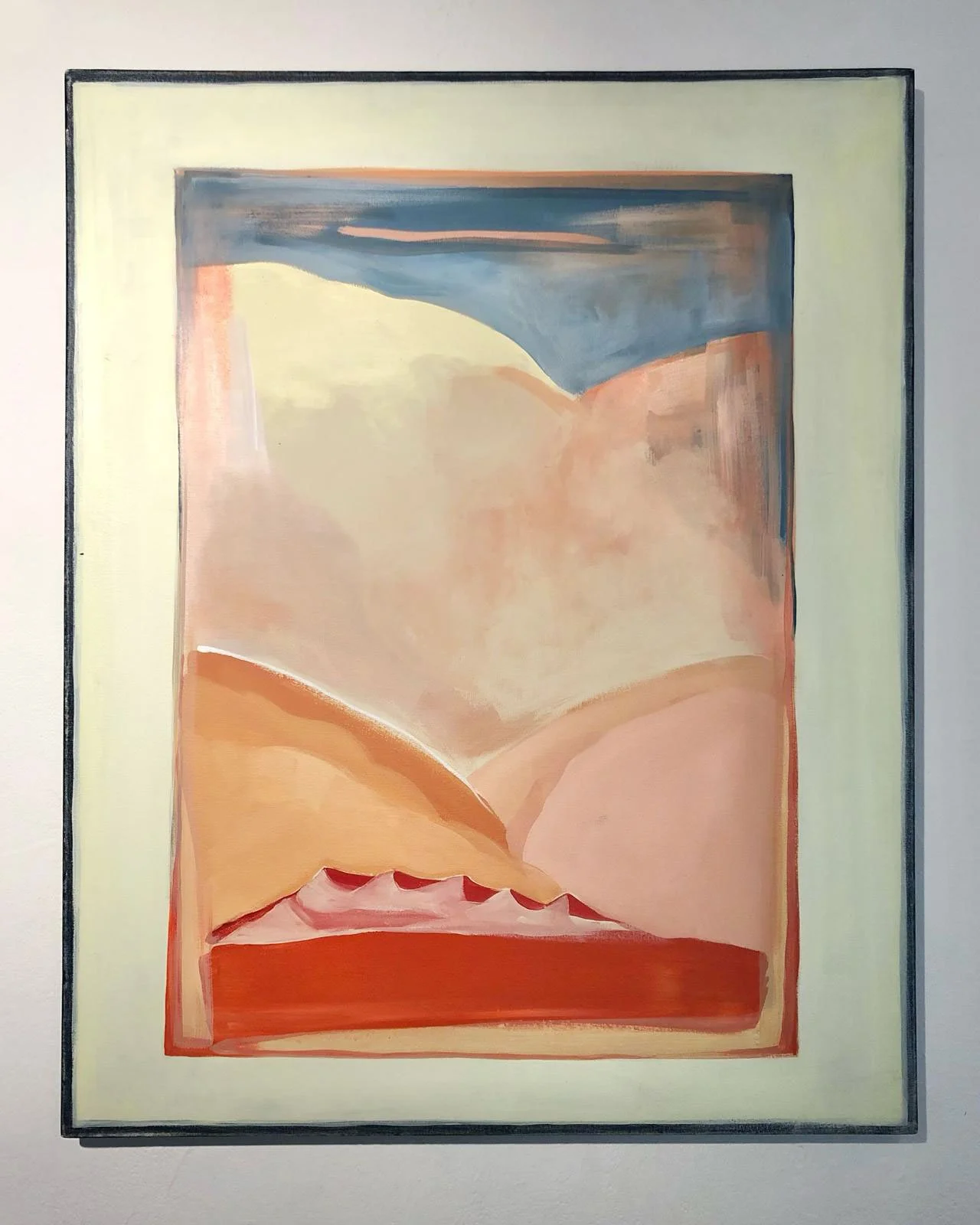
‘Sicily’, Summer 2022, 80 × 100 cm
PA: You’ve mentioned that “perceived mistakes” often become pivotal moments in a piece. Can you speak more about that?
IR: I once accidentally spilled water onto a canvas and quickly wiped it away with a painting rag. As I did, I noticed that it had lifted some of the paint and revealed the layer underneath, leaving a mark that felt much more interesting than anything I might have deliberately created. It had a sense of spontaneity and texture that I wanted to explore further.
Since then, wiping back into the paint has become a technique I return to quite often. I love discovering new ways of making marks and seeing how different tools, materials and gestures can reveal something unexpected. It’s a good example of how an apparent mistake can open up a new possibility, and how being willing to respond to those moments can take a painting somewhere I hadn’t anticipated. I try to stay open to these accidents rather than immediately correcting them, because they can often bring a freshness and energy to the work that would be difficult to plan.
PA: How has becoming a mother influenced your relationship with time, focus, or the emotional reflection that’s such an important part of your work?
IR: Becoming a mother has definitely changed my relationship with time and my painting practice, and I think it’s an ongoing process of finding a new balance. I have less time to give to painting, and I’ve become more aware of the energy and focus it requires. Painting is deeply engaging, but it can also be demanding, and finding the time and headspace to fully immerse myself in it can be challenging.
At the same time, I’m seeing the world through new eyes, and I don’t want to miss this time with my child. There’s a tension between embracing this stage of life and missing the regularity of my studio practice, and the sense of connection with myself that painting brings.
I’m beginning to explore a different way of working, bringing more of my practice into the home through small drawings and gestural paintings. Recently, I used my child’s pastels to make a quick drawing of the tiles and shelves in my kitchen, a space I spend a lot of time in these days. It felt like a way of allowing painting to exist within my everyday life, rather than needing to step away from it entirely.
I’m interested in how these smaller, more immediate pieces might feed back into my studio practice, becoming starting points for larger, more prolonged paintings. I’m not sure exactly where this shift will lead, but I like the idea of my work evolving alongside this new stage of life.I’m beginning to explore a different way of working, bringing more of my practice into the home through small drawings and gestural paintings.. like a way of allowing painting to exist within my everyday life.
I’m beginning to explore a different way of working, bringing more of my practice into the home through small drawings and gestural paintings.. like a way of allowing painting to exist within my everyday life..
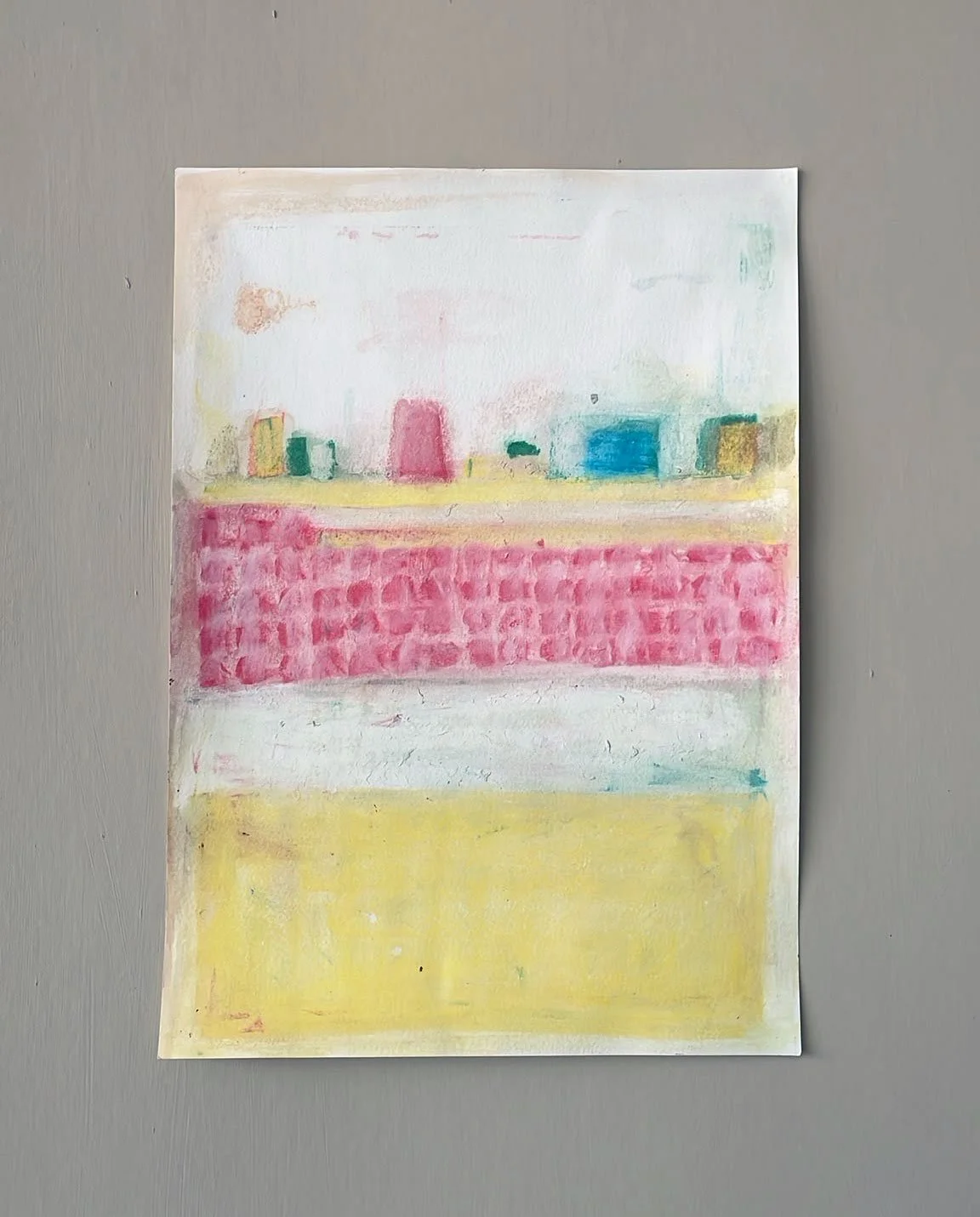
Drawing in wax pastels
PA: You participated in the Paréa Ada retreat on Chios island this past September. What was the experience like?
IR: I had the dreamiest week on Chios! It was amazing to step away from the usual rhythms of life in London and have the space to focus, experiment and fully immerse myself in painting, and in such a beautiful, peaceful setting. I loved getting stuck into all the workshops and simply having the time to make work without the usual distractions.
Painting can be quite a solitary practice, so spending each day painting alongside other artists felt really special. I found it fascinating and inspiring to see how everyone responded differently to the workshops and approached their work.
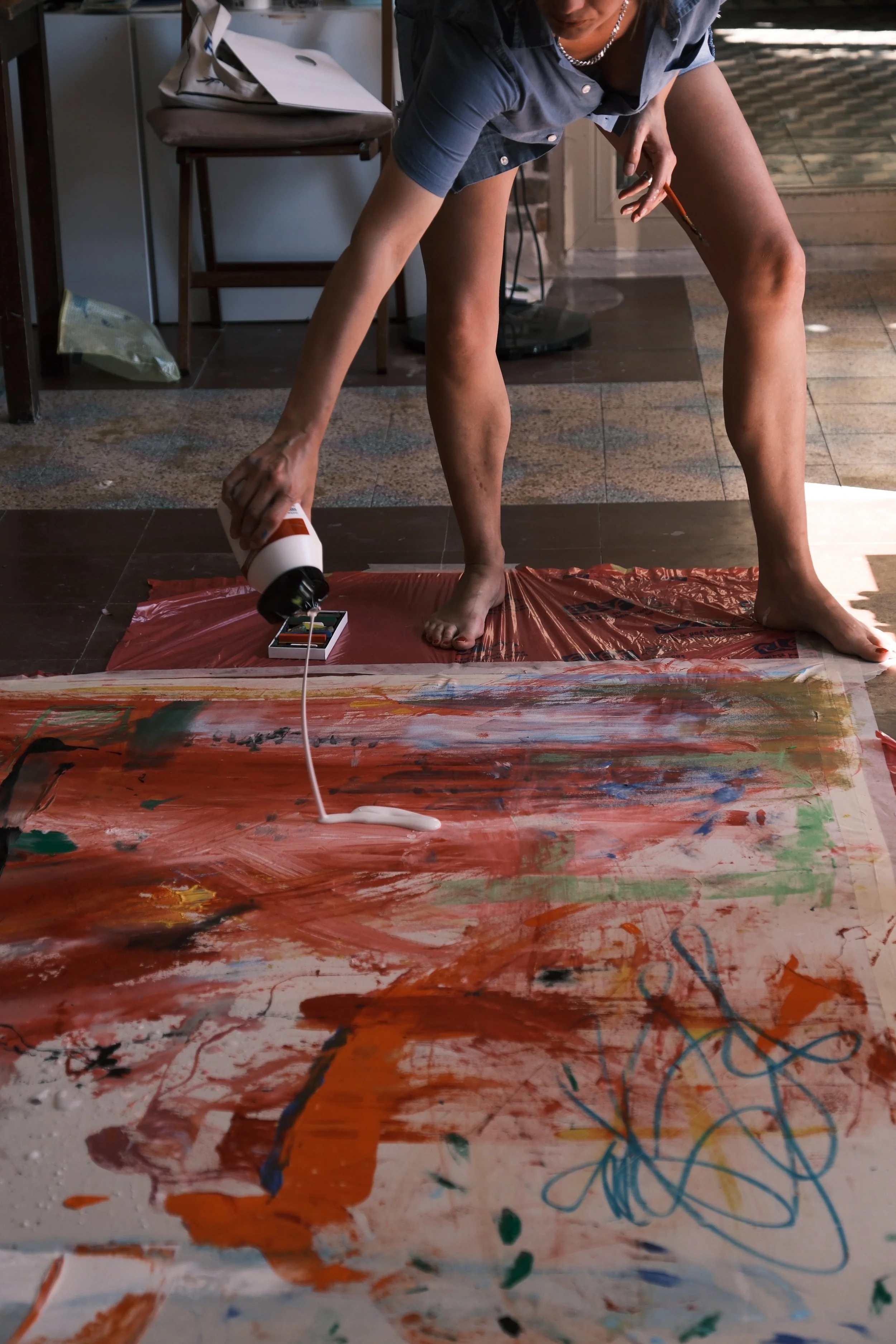
One moment that has really stayed with me was watching Helen attack a canvas. There was such energy and flow in the way she painted, almost like a dance. It was a reminder of how differently we all approach the act of painting, and how inspiring it can be to witness someone else completely absorbed in their process.
I returned home feeling creatively refreshed, with a renewed appreciation for the energy that comes from painting in company and sharing that experience with others.
There was something really freeing about watching everyone dive in so instinctively, without being too precious about what they were doing.
PA: What did you discover (or rediscover) about yourself as an artist during your time on Chios?
IR: I think Chios reminded me how much I value having the space to step outside my usual routine and reconnect with my creativity. The painting workshops with Helen gave me time to experiment and immerse myself in my work, while the natural dyeing workshops with Christiana introduced me to a different way of working with colour and materials.
I was particularly inspired by the energy and pace everyone brought to the large-scale collaborative painting. There was something really freeing about watching everyone dive in so instinctively, without being too precious about what they were doing. It reminded me to loosen up, take risks and sometimes just go for it, rather than overthinking every decision.
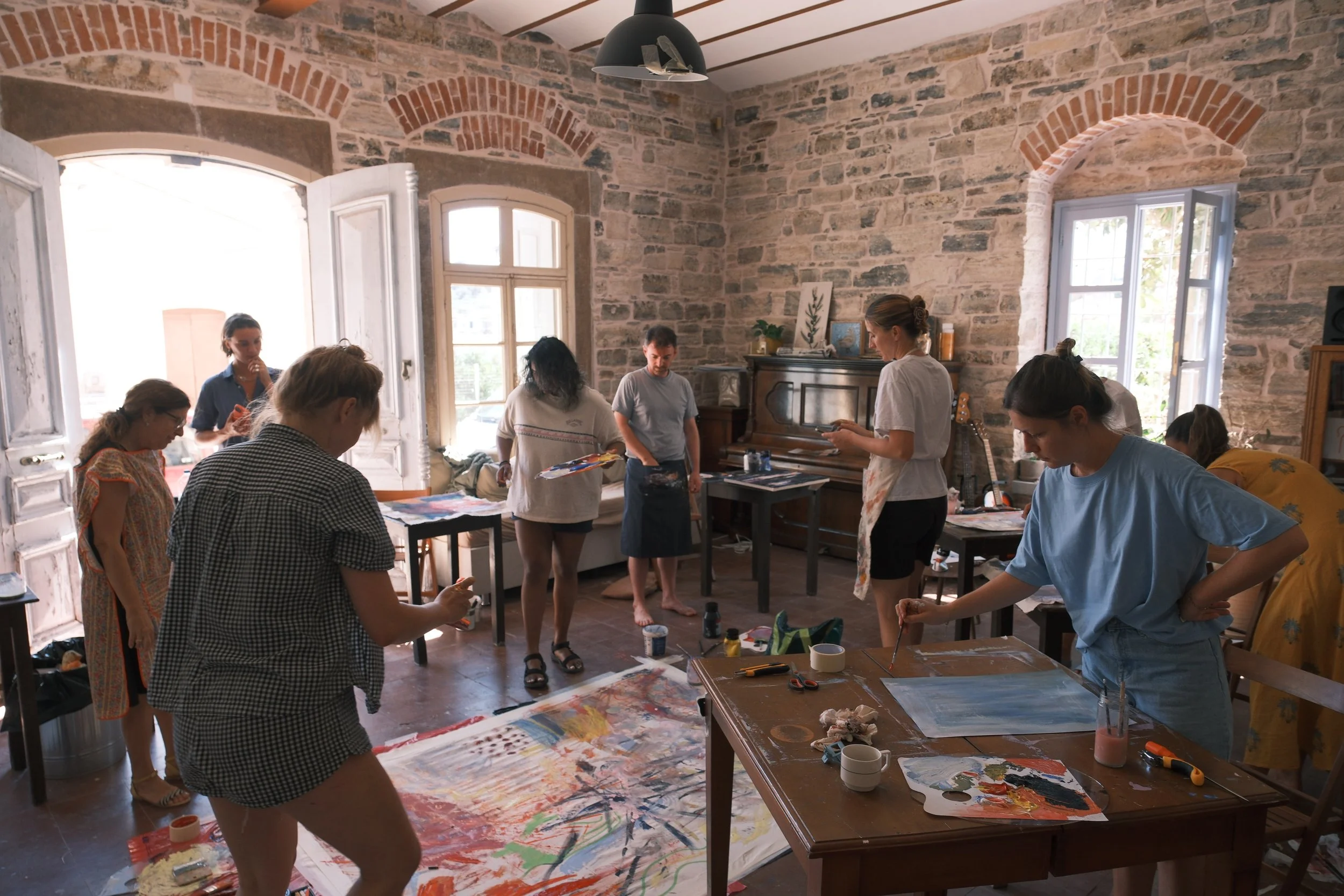
I also loved the rhythm of the days, swimming in the sea, sharing breakfasts and dinners on the balcony, and having long conversations with everyone. The sunshine and the colours of the island clearly found their way into my work too, because I came home with a much brighter palette than usual, which felt like a little piece of Chios had followed me back to London.
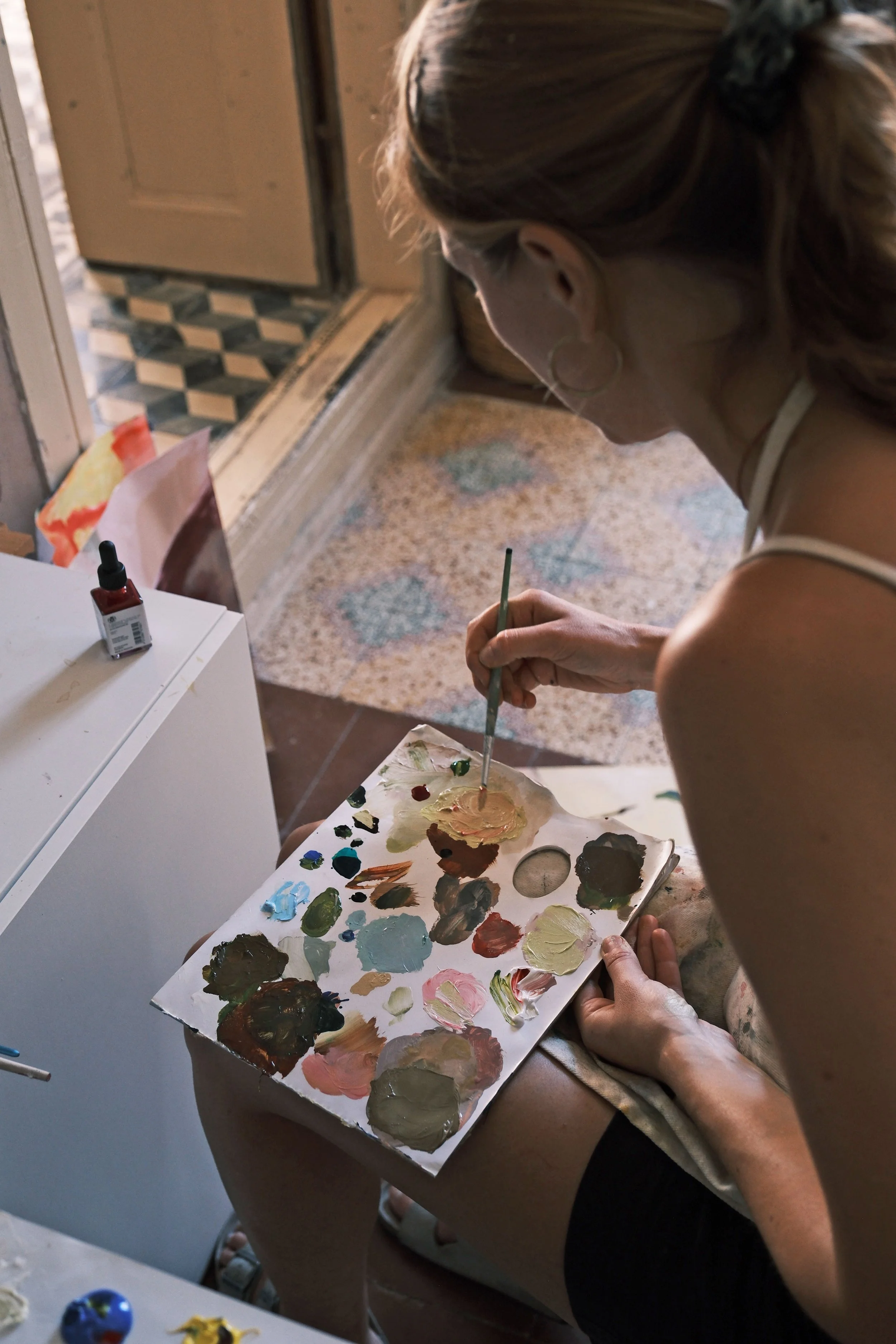
I reconnected with the curiosity and sense of play that are so important to my practice. It reminded me that inspiration doesn’t only come from being in the studio; it comes from new experiences, different ways of making, and the people you share them with.
PA: Looking back at the workshops and creative time there, what proved to be the most beneficial aspect for your development as an artist?
IR: I think the most beneficial aspect was being able to step outside my usual routine and approach painting with a renewed sense of freedom and play. Everyone brought such different energy and approaches to it, and I loved how instinctively people got stuck in without worrying too much about the outcome. It reminded me of the value of letting go of control and trusting the process, something I’m always trying to embrace more in my own work.
It was a lovely reminder that inspiration can find its way into your work in unexpected ways, often without you consciously realising it at the time.
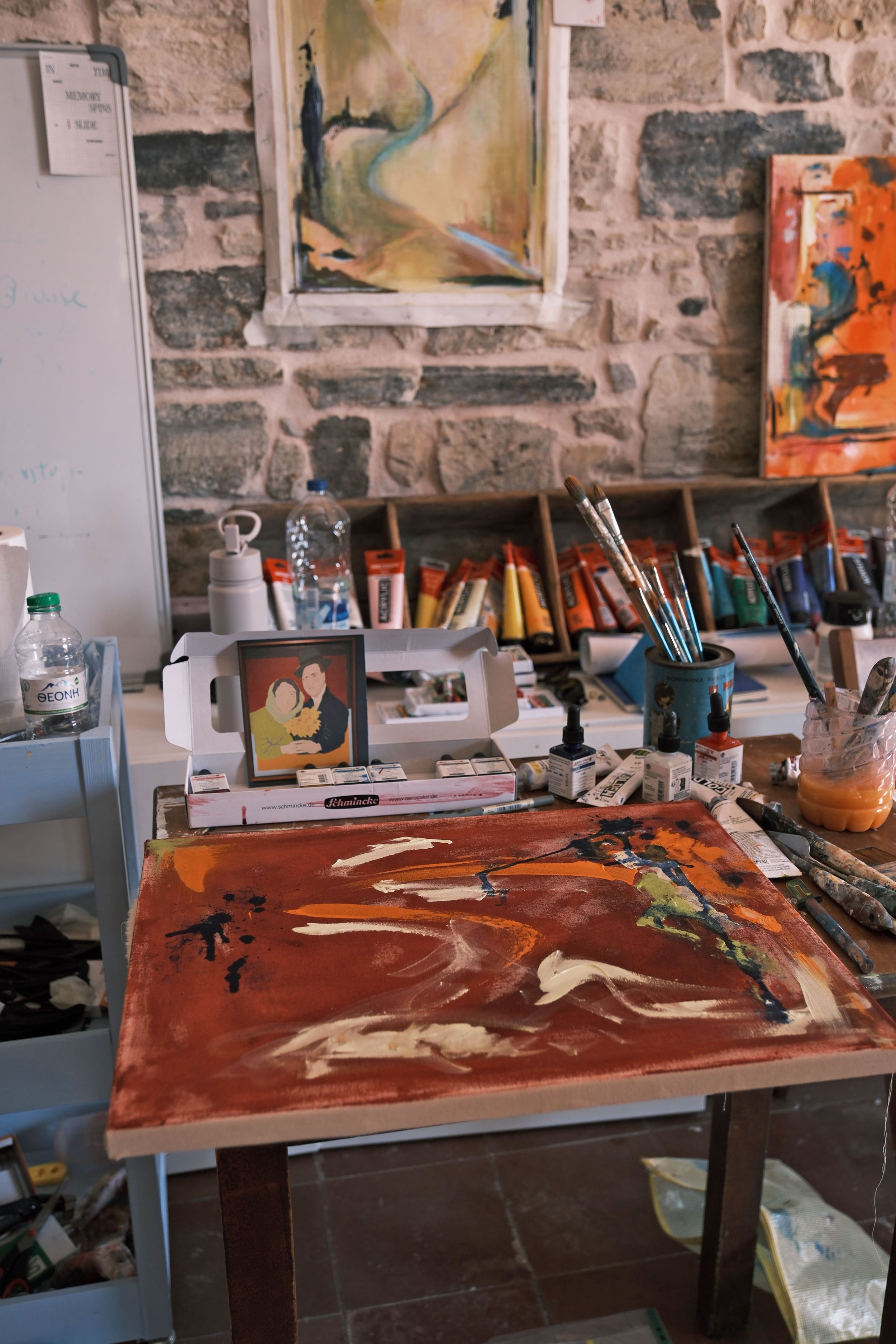
Work in progress during the retreat on Chios island
PA: What have you been working on since returning home?
IR: Since returning from Chios, I’ve been working on a painting inspired by a photograph I took of my daughter in the garden, looking at her own shadow. We were asked to bring images to the retreat as potential starting points, and although I didn’t end up using this particular photograph there, I kept coming back to it. I was drawn to its warmth of colour and interesting perspective, as well as the quiet moment it captured.
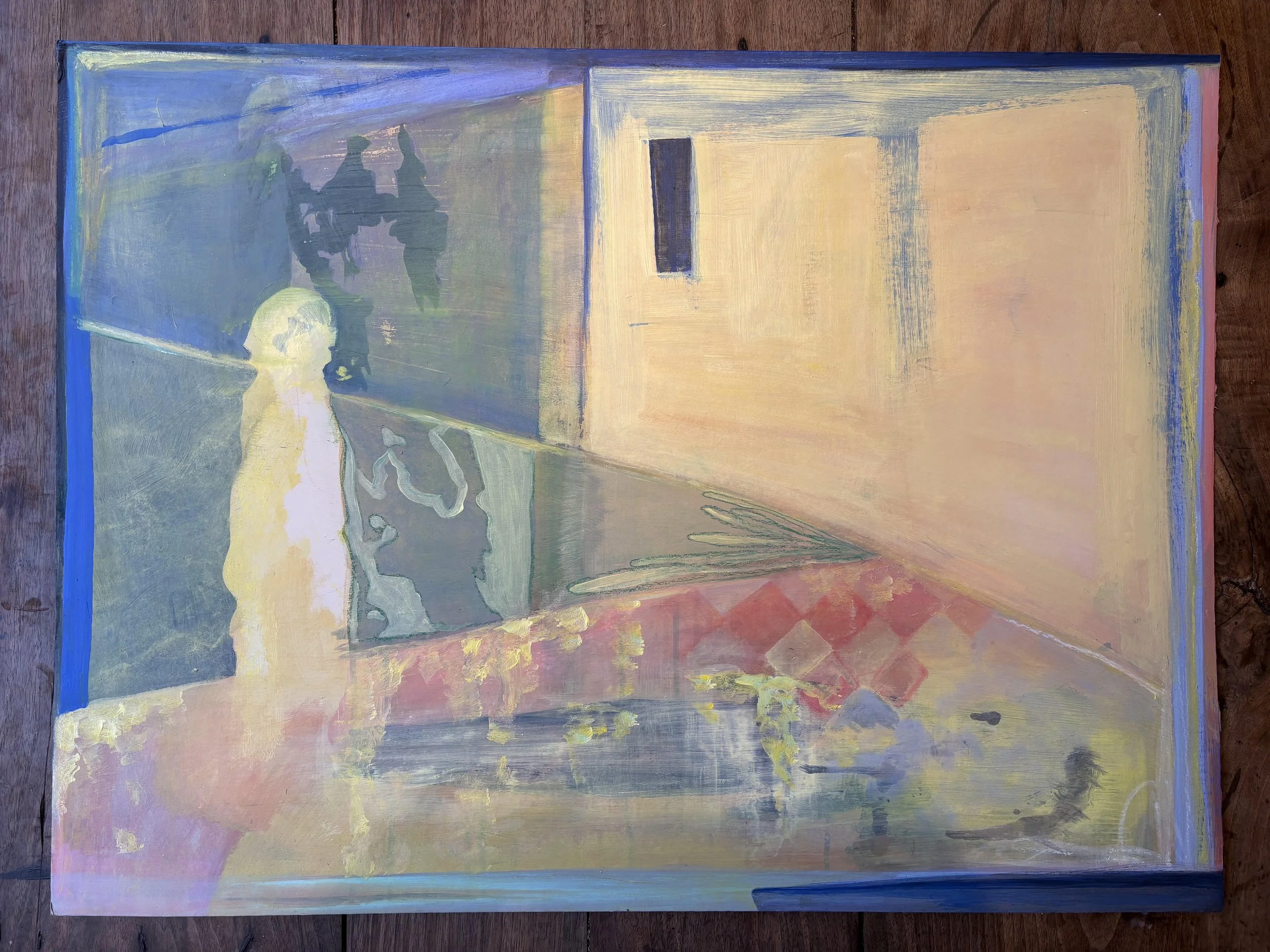
Work in progress
It also connects to a growing curiosity in my work around domestic settings and the small moments of everyday life. I’ve now scaled the image up onto a large board and am in the process of working out what needs to be stripped back. At the moment, it feels too literal, so I’m trying to move away from simply depicting the scene and towards capturing something of its feeling through colour, composition and mark-making.
I’m interested to see where it goes, and how I can use an image as a starting point without becoming too tied to what’s actually in front of me.
PA: How would you like to see your work progress into the future? Is there anything you’re working towards right now?
IR: I’d like to keep developing my practice in a way that feels intuitive and open to change. I’m interested in exploring how everyday moments and familiar surroundings might become starting points for paintings, and how I can take something recognisable and gradually strip it back to its colour, movement and feeling.
At the moment, I’m also finding my way towards a new rhythm of working alongside motherhood, and I’m curious to see how that might influence the work itself. I’d love to keep experimenting with scale, materials and mark-making, and to continue pushing myself beyond what feels familiar or comfortable.
I often feel as though I’m always reaching for something in my painting, trying to find a resolution that never quite feels final. I’m trying to embrace that uncertainty rather than resolve it. I want to keep following that curiosity, allowing the work to surprise me and seeing where it takes me, rather than feeling I need to have it all figured out from the get-go.
